TRENDING

Tuesday, 6 October 2026
----------------------
25 Rabi' Al-Thani 1448 AH
NATO Secretary-General Mark Rutte declared the alliance reunited after a contentious summit in Ankara, framing internal disagreements with U.S. President Donald Trump as a demonstration of democratic strength against authoritarian rivals.
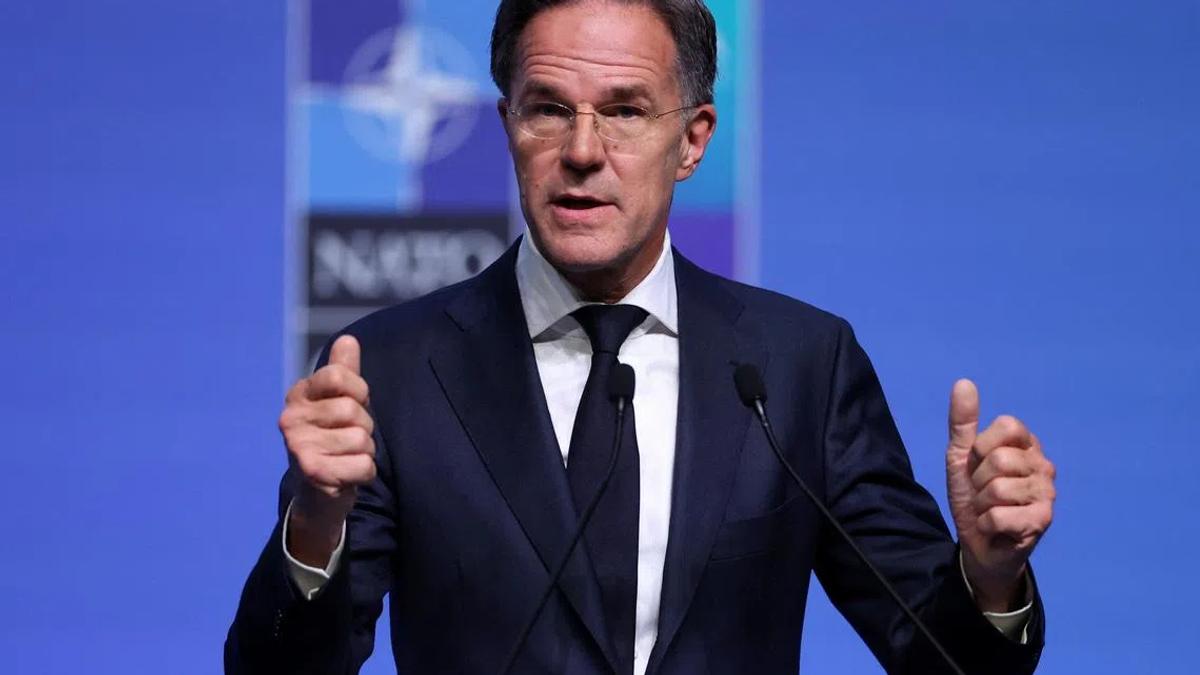
The recent NATO leaders' summit in Ankara, held on July 8, 2026, concluded with a notable declaration from Secretary-General Mark Rutte: the alliance had reunited following what he termed a 'quarrel' with U.S. President Donald Trump. This assertion by Rutte, made in an interview with Reuters, underscores the persistent challenges to transatlantic cohesion, even as the alliance seeks to project a unified front against evolving global threats.
The summit was characterized by public tensions, primarily stemming from President Trump's rhetoric and policy positions. Reports indicated that Trump publicly threatened to impose trade cuts on Spain, reignited historical disagreements regarding the Iran war, and reiterated claims on Greenland. Such pronouncements, delivered on the international stage, have historically created friction within the alliance, raising questions about the reliability of U.S. commitment and the shared strategic vision among member states. However, despite these public displays of discord, President Trump reportedly later recommitted to the alliance, expressing 'a lot of love' and unity among the 32 leaders present.
Secretary-General Rutte, known for his pragmatic approach to diplomacy, defended his method of engaging with President Trump. He emphasized that his strategy involves both public praise for positive actions and private disagreement when necessary, all while prioritizing the maintenance of alliance unity. This approach reflects a delicate balancing act, aiming to mitigate potential ruptures while navigating the often-unpredictable dynamics of U.S. foreign policy under the Trump administration.
A central theme of Rutte's post-summit remarks was the strategic message conveyed to external adversaries, particularly Russia. When questioned about whether the internal infighting undermined NATO's deterrence message, Rutte countered that the ability of democratic nations to openly debate, disagree, and then converge around a common purpose is, in itself, a powerful demonstration of strength. He explicitly challenged Russian President Vladimir Putin, suggesting that Russia would benefit from similar open discussions.
This framing is highly significant in the current geopolitical climate. NATO has consistently identified Russia as the primary threat to the security of its members, a stance reinforced by Moscow's 2022 invasion of Ukraine. In response, NATO members have substantially increased defense spending, signaling a renewed commitment to collective security. Rutte's argument posits that the very act of public disagreement within NATO, followed by a reaffirmation of unity, showcases a resilience and adaptability that authoritarian regimes like Russia, China, and Iran lack. This narrative aims to transform perceived weakness (internal division) into a strategic asset (democratic robustness).
The Ankara summit and Rutte's subsequent comments highlight several critical geopolitical implications. Firstly, they underscore the enduring importance of transatlantic relations, even when strained. The U.S. remains the cornerstone of NATO's military strength, and its commitment is vital for the alliance's credibility and operational effectiveness. The ability of European allies to manage and absorb U.S. policy shifts, while maintaining their own strategic autonomy, will continue to be a defining challenge.
Secondly, the episode reinforces the ideological dimension of the current global order. Rutte's explicit contrast between democratic open debate and authoritarian opacity is a direct challenge to the narratives propagated by Russia and China, which often portray Western democracies as weak or fractured. By emphasizing the capacity for internal self-correction and unity through consensus, NATO seeks to bolster its legitimacy and appeal on the international stage.
Finally, the events at Ankara serve as a reminder of the ongoing need for NATO to adapt to both internal political volatility and external security threats. The alliance's ability to maintain cohesion, despite the diverse interests and political landscapes of its 32 members, will be crucial for its long-term relevance. The 'reunion' at Ankara, while perhaps a temporary resolution to immediate tensions, signals a continued effort to project strength and unity in a complex and increasingly multipolar world, where the stakes for global security remain exceptionally high.
Source referenced: STRAITSTIMES
This brief was synthesized by our Editorial Engine and reviewed by The Ground Narrative team.


