TRENDING

Sunday, 4 October 2026
----------------------
23 Rabi' Al-Thani 1448 AH
A tragic diving accident in the Maldives has claimed the lives of five Italian researchers and a Maldivian rescue diver. The incident, believed to be the worst of its kind in the nation, has prompted
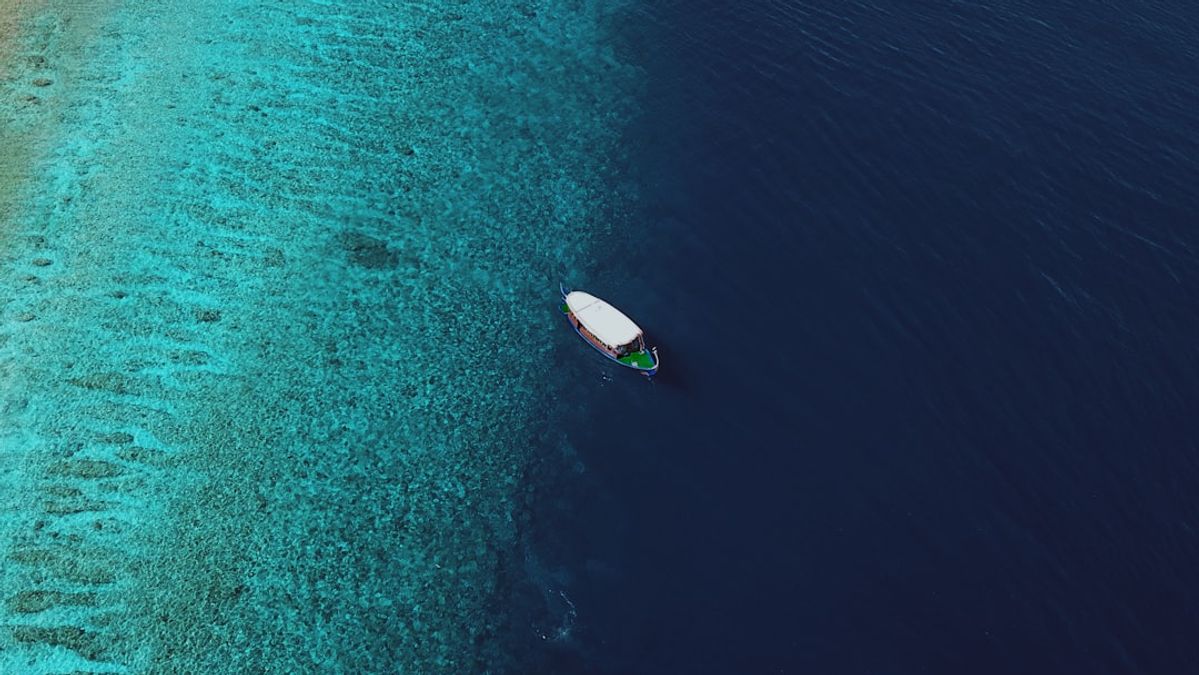
The serene waters of the Maldives, a renowned global diving destination, became the scene of a profound tragedy last week, claiming the lives of five Italian divers and a Maldivian rescue operative. The incident, believed to be the worst single diving accident in the tiny Indian Ocean nation, has prompted an ongoing investigation into the circumstances surrounding a deep cave dive undertaken by a group of Italian researchers.
On Thursday, a team of Italian divers, including academics from the University of Genoa, failed to resurface after entering the waters of Vaavu Atoll, approximately 100km south of the Maldivian capital, Male. The group comprised Professor Monica Montefalcone, her daughter Giorgia Sommacal, researchers Muriel Oddenino and Federico Gualtieri, and boat operations manager and diving instructor Gianluca Benedetti. The body of the first Italian victim was recovered shortly after the initial incident, near the entrance of a 60-meter-deep cave.
A joint team of highly trained Finnish and Maldivian divers subsequently located the bodies of the remaining four Italian divers deep within the cave's third section, the furthest from its entrance. Recovery efforts are underway, with officials confirming a phased approach to retrieve the bodies in the coming days.
Adding to the tragedy, a Maldivian rescue diver, Staff Sgt Mohamed Mahdhee, died on Saturday while participating in the search operation. Mahdhee was part of an eight-member rescue team when he failed to resurface, later being found unconscious. His death underscores the inherent dangers faced by those involved in complex underwater recovery missions.
The Italian group was reportedly on a scientific research mission to study coral, holding a permit valid until Sunday that allowed them to descend to a maximum depth of 50 meters across various atolls, including Vaavu. The mouth of the cave where the tragedy occurred is situated at 47 meters below the surface, seemingly within the permitted depth. However, Maldivian government spokesperson Mohamed Hossain Shareef noted that while the group had permission for deep dives related to coral research, their proposal made no mention of a cave dive. This discrepancy between the approved research plan and the actual dive location is a central focus of the ongoing investigation.
Furthermore, questions have arisen regarding the composition of the diving group in relation to the research permit. While Professor Montefalcone and two other victims were listed as researchers, her daughter, Giorgia Sommacal, and the diving instructor, Gianluca Benedetti, were not explicitly mentioned on the permit. The University of Genoa has been approached for comment regarding the parameters of the research mission.
The weather conditions at the time of the incident have also been cited as a potential factor. Police reported rough weather in the area on Thursday morning, leading to a yellow warning for passenger boats and fishermen. While experienced divers often operate in challenging conditions, adverse weather can exacerbate risks, particularly in deep or confined environments like caves.
While primarily a tragic accident, the incident carries several international and economic implications. The involvement of Italian citizens has naturally engaged the Italian foreign ministry, which has been coordinating with Maldivian authorities on the recovery efforts. This bilateral cooperation highlights the diplomatic channels activated during international crises involving citizens abroad. Such incidents, though unfortunate, often test and strengthen diplomatic ties through shared humanitarian efforts.
For the Maldives, a nation heavily reliant on tourism, particularly high-end diving tourism, this event, described as the worst of its kind, could prompt a review of safety regulations and oversight for specialized diving activities. The country's pristine coral reefs and diverse marine life attract thousands of international divers annually, making safety protocols paramount for maintaining its reputation as a premier destination. Any perceived lapse in safety or regulatory enforcement could have minor, though potentially lasting, impacts on specific segments of its tourism industry.
The scientific nature of the mission also underscores the broader context of international marine research. Coral studies are vital for understanding climate change impacts and preserving delicate marine ecosystems. The tragedy serves as a somber reminder of the risks inherent in such critical scientific endeavors, particularly when pushing the boundaries of exploration in challenging environments. It may lead to discussions within the scientific community and regulatory bodies about enhanced safety protocols for deep and cave diving research expeditions.
As investigations continue, the focus remains on understanding the precise sequence of events that led to this devastating outcome. The Maldivian authorities, in conjunction with Italian diplomatic representatives, are working to ascertain whether all safety protocols were observed, if the dive exceeded the scope of the permit, and what specific factors contributed to the fatalities. The findings will be crucial not only for providing closure to the families of the victims but also for informing future safety guidelines for diving operations in the Maldives and potentially for international scientific expeditions globally. The incident serves as a stark reminder of the unforgiving nature of the deep sea and the critical importance of stringent safety measures in all underwater explorations.
Source referenced: BBC
This brief was synthesized by our Editorial Engine and reviewed by The Ground Narrative team.


