TRENDING

Monday, 21 September 2026
----------------------
10 Rabi' Al-Thani 1448 AH
Belgium’s WHO director‑general hopeful Hans Kluge called for tighter China‑Europe health cooperation at the Boao Forum, a move that intertwines his candidacy with shifting power balances in global health governance.
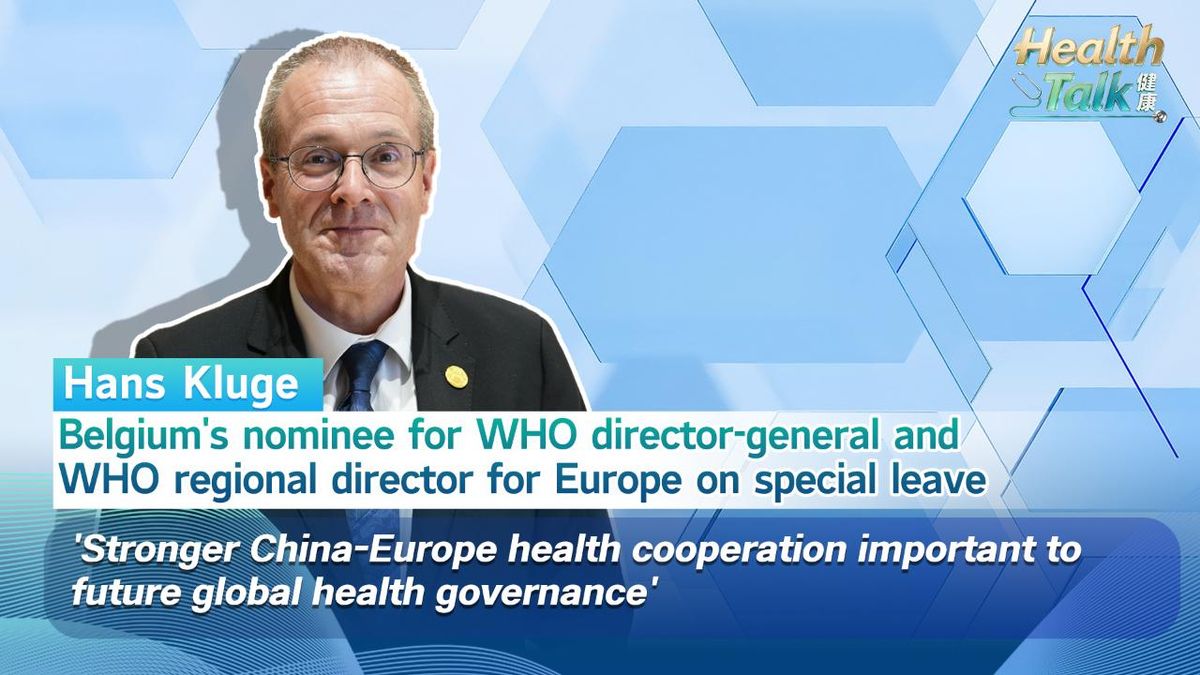
Hans Kluge, Belgium’s nominee for World Health Organization director‑general and current WHO Regional Director for Europe, used the Boao Forum for Asia Global Health session in Haikou (Sept 15‑16, 2026) to urge deeper China‑Europe collaboration on artificial intelligence, primary care and healthy ageing. The remarks were part of an exclusive CGTN interview and came as delegates from 32 countries gathered to discuss post‑pandemic health strategies.
Kluge’s appeal is not merely a public‑health plea; it is a calculated move within three intersecting power structures.
* Candidate positioning – By foregrounding China‑Europe ties, Kluge signals to both the European bloc and Beijing that his leadership would bridge two of the WHO’s most influential constituencies. This dual‑track courting can tip the opaque election calculus that weighs regional block votes against the preferences of the United Nations’ most financially potent members.
* Funding realignment – The WHO’s budget remains heavily dependent on voluntary contributions, with China and the EU among the top donors. A narrative of joint research on AI‑driven disease surveillance promises new streams of earmarked funds, reducing the organization’s reliance on traditional Western philanthropies and giving donor nations leverage over agenda‑setting.
* Geopolitical hedging – Europe faces a strategic dilemma: maintain a united front on standards for data privacy and vaccine equity while avoiding a diplomatic rift with a rising China that can supply critical medical supplies and technology. Kluge’s call offers a diplomatic buffer, allowing European ministries to claim cooperation without conceding policy control.
* Domestic political calculus – In Belgium, the nomination is a point of national pride and a tool for the governing coalition to showcase influence on the world stage. Aligning the candidacy with a high‑visibility China‑Europe initiative helps the government justify its support domestically, especially ahead of upcoming elections.
While officials trade diplomatic capital, the everyday stakes fall on patients, clinicians and researchers across the continent.
* Rural health workers – Primary‑care reforms that depend on AI tools often assume robust digital infrastructure. In many Eastern European and Balkan regions, clinics still lack reliable broadband, meaning promised efficiencies could widen the gap between urban hospitals and out‑lying practices.
* Elderly populations – The emphasis on “healthy ageing” translates into preventive programmes that require sustained public‑health funding. Budget reallocations toward joint research may divert resources from local vaccination drives, home‑care services, and community health workers who are the first line of defence for seniors.
* Data‑subject citizens – Cross‑border health data sharing raises privacy concerns. European citizens accustomed to GDPR protections could see their medical records processed under less stringent Chinese regulations, exposing them to commercial exploitation or state surveillance.
* Researchers in low‑income settings – Joint AI projects often prioritize data from well‑resourced hospitals, marginalising scientists from poorer regions who lack access to high‑quality datasets, thereby reinforcing existing inequities in global health research.
Official statements celebrate cooperation, yet several critical dimensions are being downplayed.
* Standard‑setting power – By aligning with China on AI health tools, Europe may tacitly endorse technical standards that favor Chinese manufacturers, potentially locking European markets into non‑EU‑compatible hardware and software.
* Political leverage – China’s growing role in WHO financing gives it informal veto power over policy proposals that conflict with its domestic agenda, such as stricter tobacco control or investigations into the origins of emerging pathogens.
* Economic competition – The health‑tech sector is a lucrative arena. Joint projects could open doors for Chinese firms to enter European markets, challenging homegrown companies and reshaping supply chains.
* Narrative framing – The focus on “prevention” and “healthy ageing” diverts attention from systemic issues like under‑investment in public hospitals, workforce shortages, and the lingering effects of pandemic‑era austerity measures.
Readers should monitor three developments that will reveal whether Kluge’s diplomatic overture translates into concrete shifts.
1. Election dynamics – The WHO director‑general vote is slated for early 2027. Track how member states, especially EU members and the G20, position themselves after the Boao statements.
2. Funding allocations – Watch for new joint grant calls from the EU Horizon Europe programme and China’s Ministry of Science and Technology that earmark AI‑health projects. The size and conditionality of these funds will indicate the depth of the partnership.
3. Regulatory responses – European data‑protection authorities may issue guidance or restrictions on cross‑border health‑data exchanges. Any legal push‑back will signal the limits of political goodwill.
By tracing these threads, ordinary citizens can see how a high‑profile interview at a scenic Chinese resort may ripple through hospital budgets, privacy laws and the very composition of the global health institution that shapes pandemic responses worldwide.
Source referenced: CGTN
This brief was synthesized by our Editorial Engine and reviewed by The Ground Narrative team.


