TRENDING

Friday, 6 November 2026
----------------------
26 Jumada Al-Awwal 1448 AH
In November 2026, Israeli settlers seized eight homes in Jericho, forcing dozens of Palestinians to flee. The episode reveals deep‑seated power plays and a growing humanitarian crisis in the occupied West Bank.
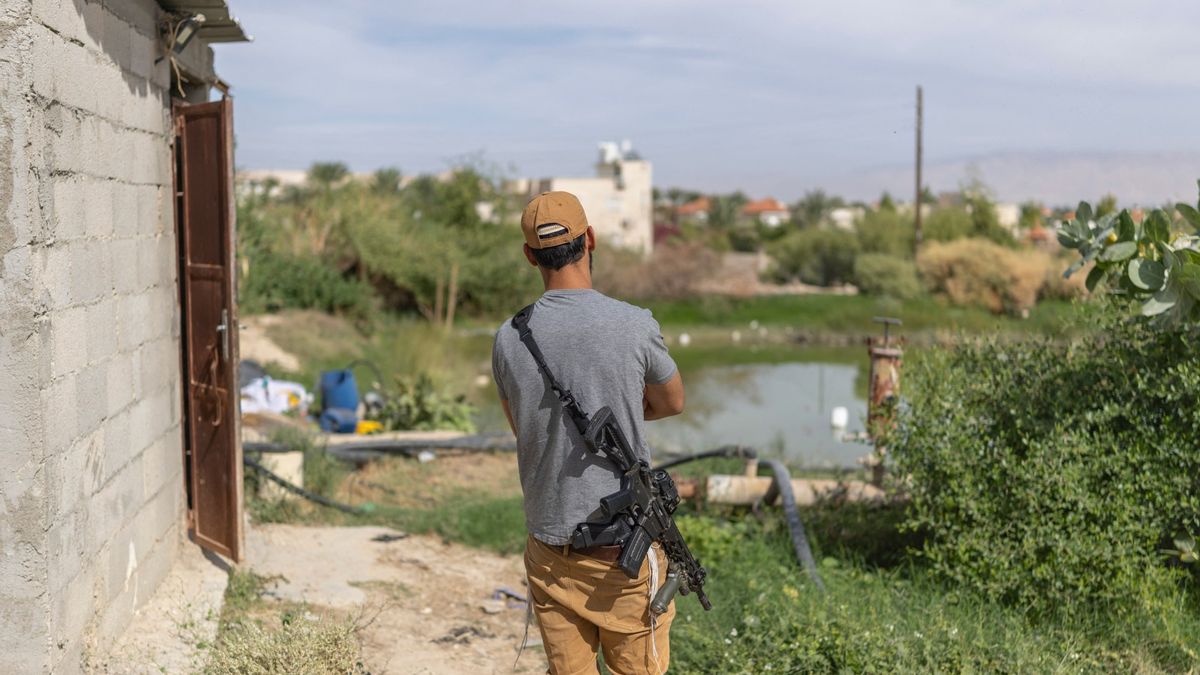
On November 5, 2026, a group of roughly thirty Israeli settlers affiliated with the right‑wing Nachala organization entered the Ein a‑Duyuk a‑Tahta neighborhood on the outskirts of Jericho. They claimed legal ownership of eight Palestinian houses, used live ammunition, and physically assaulted residents, prompting families to abandon their homes. The Israeli military subsequently declared the area a closed military zone, blocking humanitarian aid and cementing the settlers’ control.
The seizure is not an isolated incident but part of a broader strategy to reshape the demographic and political landscape of the West Bank. Nachala receives funding from private donors and state‑linked channels that view settlement expansion as a lever for Israeli domestic politics, especially ahead of upcoming elections where hard‑line constituencies demand tangible annexation progress. By presenting the purchase as a legal transaction, settlers sidestep the illegality of settlement activity under international law while creating a de‑facto fact‑on‑the‑ground that forces the Palestinian Authority to respond defensively. The Israeli military’s rapid designation of a closed zone serves two purposes: it protects settlers from legal scrutiny and signals to Palestinian residents that resistance will be met with heightened security measures. This calculus also benefits the Israeli government, which can claim to be maintaining order while avoiding direct responsibility for settler violence, thereby preserving diplomatic cover in international forums.
Dozens of families, many with young children, were thrust into temporary shelters lacking basic utilities. Their loss extends beyond bricks and mortar; it includes the disruption of schooling, loss of livelihood tied to home‑based agriculture, and the psychological trauma of forced migration.
Jericho’s informal economy, heavily reliant on tourism and small‑scale farming, suffers when residents are barred from accessing their land. The closure of the area also hampers trade routes, inflating the cost of goods for both Palestinians and nearby Israeli settlements.
The region’s already strained health infrastructure, strained further by UN‑reported funding cuts to the Palestinian Authority, now faces an influx of patients without adequate shelter or medication. The military zone status prevents NGOs from delivering essential medical supplies, compounding the risk of disease outbreaks.
Settlers present forged purchase documents as proof of legitimacy, a tactic that exploits gaps in the Oslo Accords framework governing Area C. While Israeli courts occasionally entertain such claims, the lack of transparent verification allows the narrative of “legal acquisition” to dominate public discourse, obscuring the reality of forced displacement.
The UN condemnation, though swift, is limited to statements without concrete enforcement mechanisms. Major powers, preoccupied with broader regional tensions, refrain from imposing sanctions or demanding restitution, effectively normalizing settler aggression as a low‑priority issue.
Mainstream coverage often emphasizes the “settlers’ excitement” or the alleged legality of the purchase, marginalizing Palestinian voices. This framing diverts attention from the systematic pattern of settlement‑driven land grabs that have accelerated since 2023, presenting each incident as an isolated flare‑up rather than a coordinated policy.
Observers should monitor the Israeli government’s response to upcoming legal challenges filed by the Palestinian Authority and human‑rights groups, as well as any shift in UN engagement that could translate statements into actionable pressure. The expansion of settlement activity in Area C, especially in proximity to water resources and agricultural zones, will likely dictate the scale of future displacements. Finally, the political calculus within Israel—particularly the influence of settlement‑backed parties on coalition formation—will shape whether incidents like Jericho become a catalyst for policy change or a normalized element of the status quo.
Settlers use forged purchase documents to create a veneer of legality, exploiting ambiguities in the Oslo Accords and Area C regulations. This strategy helps them avoid immediate legal challenges and garners domestic political support.
Beyond issuing statements, the international community could pursue targeted sanctions on settlement funding networks, support legal aid for affected Palestinians, and pressure Israel to allow humanitarian access to closed zones.
Editor's Note: Analysis based on multiple reputable sources; on‑ground verification limited due to restricted access.
Source referenced: ALJAZEERA
This brief was synthesized by our Editorial Engine and reviewed by The Ground Narrative team.