TRENDING

Friday, 6 November 2026
----------------------
26 Jumada Al-Awwal 1448 AH
The 2026 midterm elections turned the nation’s AI data‑center boom into a decisive political issue. Democrats rode a wave of voter anxiety to flip key seats, while tech moguls watched their spending backfire.
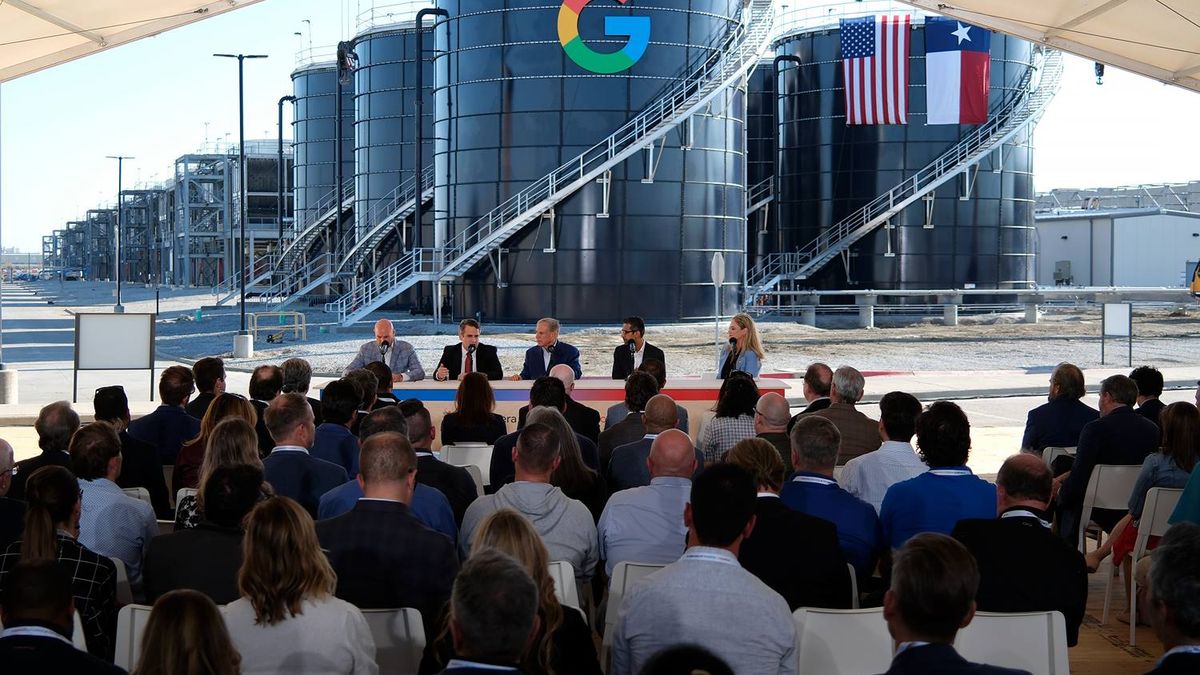
The November 2026 midterm elections delivered a surprise swing in several traditionally red states, driven largely by voter concern over AI and the flood of new data centers. Exit polls showed that 57 % of respondents believed AI would do more harm than good, and 56 % said the technology was a major factor in their vote. Candidates who pledged to curb the rapid build‑out of hyperscale facilities won in Texas, Georgia, Ohio, and other battlegrounds, unseating incumbents who had courted the tech industry. Meanwhile, tech billionaires poured more than half a billion dollars into Republican campaigns, hoping to preserve a deregulated environment, but the money failed to offset the growing public backlash.
The clash over data centers is a textbook case of competing incentives. Tech billionaires view massive computing farms as the backbone of future profits, especially as generative AI models demand ever‑larger clusters of GPUs. Their political calculus has long favored the Republican agenda that promises minimal regulation, cheap electricity, and tax breaks for new builds. In return, state leaders like former Texas Gov. Greg Abbott promised to make their jurisdictions the "epicenter of AI development," hoping to attract billions in private investment and create headline‑grabbing jobs.
However, the Democratic surge reveals a different survival strategy: politicians are now leveraging public unease to secure electoral advantage. By framing data‑center expansion as a threat to local utilities, water supplies, and community health, they turned a technical issue into a voter‑mobilizing narrative. The shift also reflects a broader power dynamic between federal and state authority. While the Trump administration attempted to nationalize AI rule‑making, state legislatures in New York, California, and Illinois have already passed their own AI‑safety bills, creating a patchwork of regulations that can be used as leverage in federal negotiations.
The grid strain in Texas illustrates the economic trade‑off. Data centers consume megawatts of power, forcing utilities to upgrade transmission lines—costs that are often passed onto residential customers through higher rates. Governors who initially welcomed the projects now face the political cost of rising electricity bills, prompting late‑stage policy reversals that still leave the underlying infrastructure in place.
In the Hill Country, small towns that once relied on agriculture are now shadowed by towering cooling towers. Residents report monthly electricity bills climbing 30 % after a new hyperscale facility connected to the local grid. Water withdrawals for evaporative cooling have lowered lake levels, sparking disputes with farmers who depend on the same sources for irrigation.
Ohio’s western counties, where Sherrod Brown campaigned, saw groundwater tables drop after a cluster of data centers began drawing from the same aquifers that supply municipal wells. Local health departments have documented higher incidences of heat‑related illnesses, a direct consequence of the heat‑exhaust plumes that raise ambient temperatures in otherwise temperate regions.
In Atlanta, the proposed expansion of a Google‑branded data hub triggered protests from low‑income neighborhoods fearing increased diesel‑generator noise and particulate emissions. Community groups argue that the promised high‑tech jobs rarely go to local residents, while the environmental burden—especially night‑time noise—remains disproportionately shouldered by those already facing economic hardship.
Across these examples, the pattern is clear: the promise of AI‑driven prosperity is filtered through a lens of utility costs, water depletion, and environmental degradation that falls most heavily on the least powerful.
While candidates speak of "protecting communities," the corporate narrative emphasizes national competitiveness against China and the need for "secure AI infrastructure." What is rarely highlighted is the profit margin that data‑center operators earn by locking in long‑term power purchase agreements at rates below market cost, effectively subsidizing their expansion with taxpayer‑funded grid upgrades.
Federal officials have repeatedly framed AI dominance as a matter of national security, suggesting that unchecked data‑center growth could expose critical infrastructure to cyber‑attack. This rhetoric conveniently aligns with the interests of large tech firms that seek to consolidate control over the physical layer of the internet, limiting competition from smaller regional providers.
The Trump administration’s push to centralize AI rule‑making under a single federal agency was presented as a way to streamline oversight. In reality, it would have stripped states of the ability to negotiate community benefit agreements, leaving localities with little bargaining power. The midterm backlash reveals how that vacuum allowed tech money to flow unchecked, a fact that mainstream coverage has largely omitted.
The next six months will test whether the post‑midterm momentum translates into concrete policy. State legislatures in Texas, Georgia, and Ohio are expected to introduce moratorium bills that tie data‑center permits to measurable community benefits—such as caps on water use, mandatory renewable‑energy sourcing, and profit‑sharing mechanisms for local tax bases.
At the federal level, the Democratic‑controlled Congress is likely to draft a bipartisan AI oversight bill that creates a cabinet‑level agency, but the scope of its authority will hinge on how much power states retain to enforce their own standards. Watch for the emergence of a "dual‑track" regulatory model where states become testing grounds for stricter rules that could later be adopted nationally.
Tech giants, sensing the political headwinds, are already hinting at a shift toward offshore or even orbital data‑center concepts—Musk’s tongue‑in‑cheek tweet about "data centers in space" underscores a genuine strategic pivot. If space‑based infrastructure gains traction, the local community battles that defined the 2026 midterms could be displaced to a new frontier, raising fresh questions about jurisdiction, taxation, and environmental impact.
Finally, keep an eye on the upcoming AI Bill of Rights rollout in the White House. Its implementation timeline, enforcement mechanisms, and interaction with state‑level statutes will determine whether the public’s concerns become institutionalized or remain a fleeting electoral slogan.
The story of data centers is no longer just about silicon and servers; it is about who gets to decide the price of progress and who bears that price on the ground.
Voters saw rapid data‑center expansion as a direct threat to electricity costs, water supplies, and local environments, turning abstract AI concerns into tangible community issues that influenced their ballot choices.
Stricter state rules could force tech firms to internalize infrastructure costs, limit water usage, and share economic benefits with local tax bases, potentially slowing the pace of new builds but increasing community oversight.
Editor's Note: Analysis based on publicly available election data and industry reports; ongoing legislative developments may shift dynamics.
Source referenced: FOREIGNPOLICY
This brief was synthesized by our Editorial Engine and reviewed by The Ground Narrative team.