TRENDING

Thursday, 15 October 2026
----------------------
4 Jumada Al-Awwal 1448 AH
Pakistan's Gilgit-Baltistan region is undergoing rapid transformation driven by development initiatives and a burgeoning tourism sector, yet it faces severe threats from accelerating climate change. This strategically vital area, bordering major powers, exemplifies the complex interplay between progress, environmental vulnerability, and regional stability.
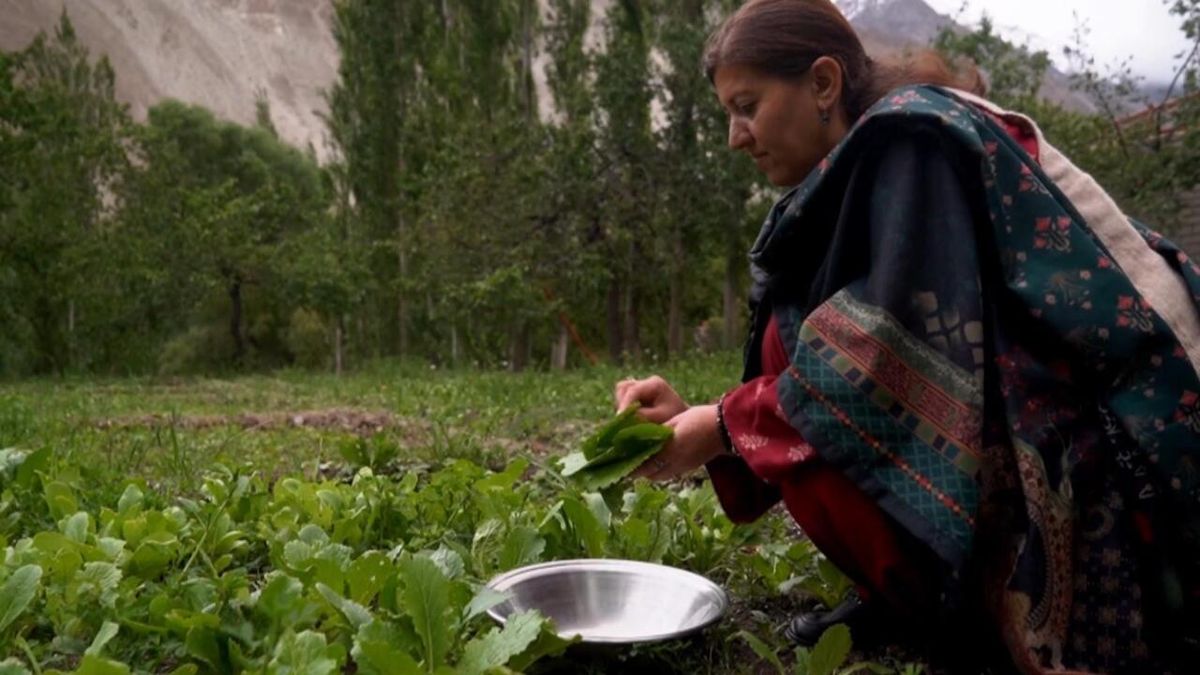
Gilgit-Baltistan, a remote and mountainous region in northern Pakistan, is currently experiencing a profound transformation, marked by both significant development and acute environmental challenges. Over the past few decades, this strategically vital area has seen improved access to education, healthcare, and infrastructure, largely propelled by local initiatives and the sustained efforts of foundations associated with the Aga Khan, the spiritual leader of the Ismaili community. This progress, however, is unfolding against a backdrop of accelerating climate change, which threatens to undermine the region's nascent economic gains and long-term stability.
The Hunza Valley, a prominent part of Gilgit-Baltistan, serves as a microcosm of this complex evolution. Historically isolated, the valley has witnessed a dramatic shift, with local development models fostering a higher quality of life for its residents, a significant portion of whom are members of the Ismaili minority. This community-centric approach, emphasizing human development, has created a foundation for growth. Concurrently, improved accessibility to the region has unlocked its immense tourism potential, drawing tens of thousands of visitors annually to its breathtaking landscapes, including some of the world's highest peaks like K2. This influx has generated new economic opportunities, particularly in hospitality and related services, but it has also spurred rapid, and at times unmanaged, infrastructure expansion, with concrete structures increasingly altering the natural environment of some valleys.
Despite the visible signs of progress, Gilgit-Baltistan finds itself on the front line of the global climate crisis. The region is home to thousands of glaciers, which are now retreating at an alarming rate due to rising global temperatures. This phenomenon is not merely an environmental concern; it is a direct threat to the region's ecological balance and its socio-economic fabric. The rapid glacier melt contributes to increased frequency and intensity of climate-related disasters, such as flash floods, landslides, and glacial lake outburst floods (GLOFs). These events devastate local communities, destroy infrastructure, and disrupt livelihoods, posing a significant challenge to an economy that is still in its formative stages.
The developments in Gilgit-Baltistan carry substantial geopolitical weight due to its critical location. Situated at the confluence of South and Central Asia, the region shares borders with Afghanistan, China, and India. Its administrative status under Pakistan is historically contentious, with India claiming it as part of the broader Jammu and Kashmir dispute. This disputed status imbues any development or instability in Gilgit-Baltistan with broader regional implications.
Crucially, Gilgit-Baltistan is a vital artery for the China-Pakistan Economic Corridor (CPEC), a flagship project of China's Belt and Road Initiative. The Karakoram Highway, which traverses this region, is a key component of CPEC, facilitating trade and connectivity between China and Pakistan. Therefore, the stability, security, and infrastructure development within Gilgit-Baltistan are not merely local concerns but are integral to the strategic interests of both Pakistan and China, impacting regional trade routes and geopolitical influence.
Furthermore, climate change in this high-altitude region has transboundary implications. The melting glaciers are a source of major river systems that flow downstream into Pakistan and India, making water resources a potential flashpoint for future disputes. Environmental degradation and resource scarcity could lead to internal displacement, economic migration, and increased vulnerability to various forms of instability, thereby acting as a security multiplier in an already sensitive geopolitical landscape.
The trajectory of Gilgit-Baltistan underscores the complex challenge of balancing rapid development with environmental sustainability. While tourism offers immediate economic benefits, unchecked expansion of infrastructure and increased human activity place immense pressure on a fragile ecosystem. The long-term viability of the region's economy, particularly its tourism sector, is intrinsically linked to the preservation of its natural beauty and ecological integrity. Sustainable development practices, climate resilience strategies, and international cooperation are essential to mitigate the adverse effects of climate change and ensure that progress does not come at an irreparable environmental cost.
In conclusion, Gilgit-Baltistan stands as a compelling case study where local development, global climate change, and intricate geopolitical dynamics converge. The region's future will not only determine the well-being of its inhabitants but will also have significant ramifications for regional stability, international relations, and the broader discourse on sustainable development in strategically critical areas.
Source referenced: FRANCE24
This brief was synthesized by our Editorial Engine and reviewed by The Ground Narrative team.


