TRENDING

Monday, 5 October 2026
----------------------
24 Rabi' Al-Thani 1448 AH
Chinese researchers have set new world records in flexible solar technology, achieving 33.6% efficiency in silicon-based tandem cells and maintaining 97% performance after 43,000 bends, marking a major step toward scalable flexible photovoltaics.
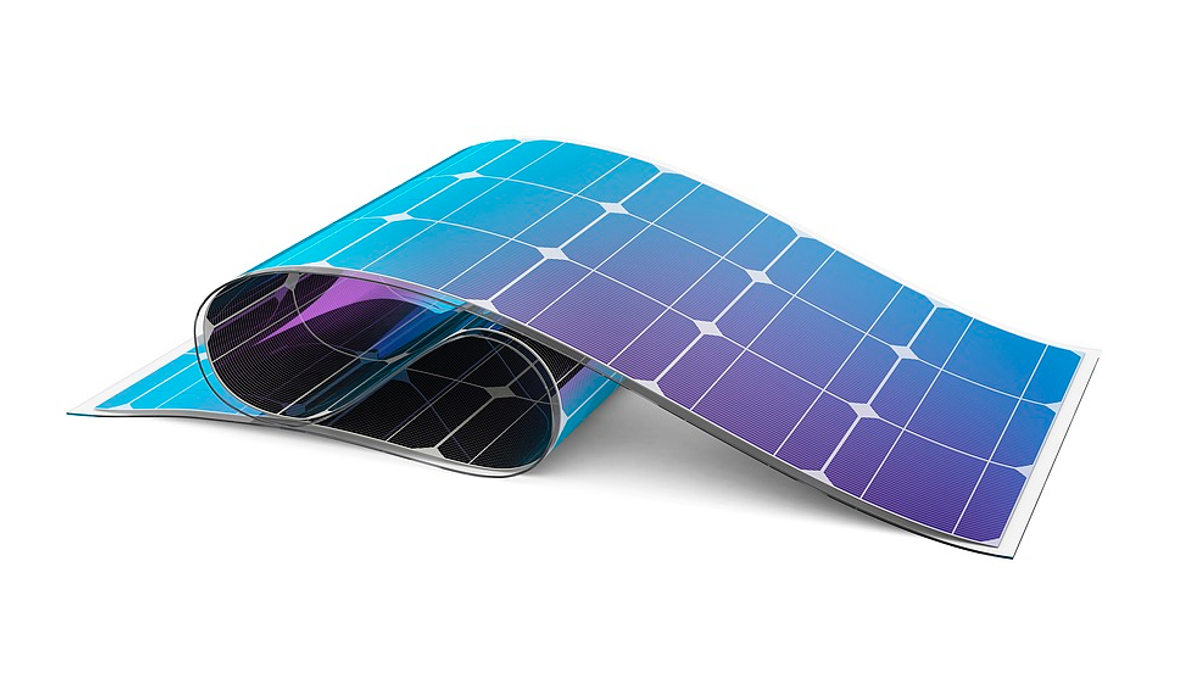
Chinese researchers have achieved a major technological breakthrough in flexible solar energy, overcoming long-standing challenges in efficiency and durability that have limited the commercial viability of next-generation photovoltaic devices.
The study, led by a team at Soochow University and published last week in the journal Nature, focuses on flexible crystalline silicon/perovskite tandem solar cells — a technology widely seen as critical for the future of lightweight, wearable, and adaptable solar applications.
Until now, flexible tandem cells have faced two major bottlenecks. Their power conversion efficiency has lagged behind rigid solar panels, and their internal interfaces have been prone to delamination and performance degradation under repeated bending or exposure to harsh environmental conditions.
To address these issues, the researchers designed a novel dual-layer buffer structure described as “loose-tight”. This architecture allows mechanical stress to be dispersed across layers while still maintaining efficient charge transport at the nanoscale, significantly improving both flexibility and electrical performance.
In parallel, the team developed a new technique for producing hydrogen-doped indium-cerium oxide films using reactive plasma deposition. This approach reduces damage at material interfaces during fabrication and improves energy-level alignment between layers — a key factor in boosting efficiency.
These combined innovations enabled the researchers to achieve a certified power conversion efficiency of 33.6 percent on an ultra-thin silicon substrate just 60 micrometers thick, setting a new world record for flexible tandem solar cells.
The team also demonstrated scalability by fabricating a large-area device measuring 261 square centimeters — equivalent to a standard wafer — which achieved an efficiency of 29.8 percent, another global record for flexible tandem cells of that size.
Beyond efficiency, the cells showed exceptional mechanical durability. After undergoing 43,000 extreme bending cycles, the devices retained 97 percent of their original performance, underscoring their potential for real-world deployment.
Researchers say the breakthrough lays a strong scientific and technological foundation for the large-scale application of flexible photovoltaics and could accelerate innovation across the silicon-based solar industry, from portable electronics to building-integrated energy systems.