TRENDING

Monday, 5 October 2026
----------------------
24 Rabi' Al-Thani 1448 AH
As Japan approaches the 80th anniversary of the end of World War II, Yasukuni Shrine remains one of the country’s most contentious sites. Enshrining millions of war dead, including convicted war criminals, the shrine continues to strain Japan’s relations with its Asian neighbors.
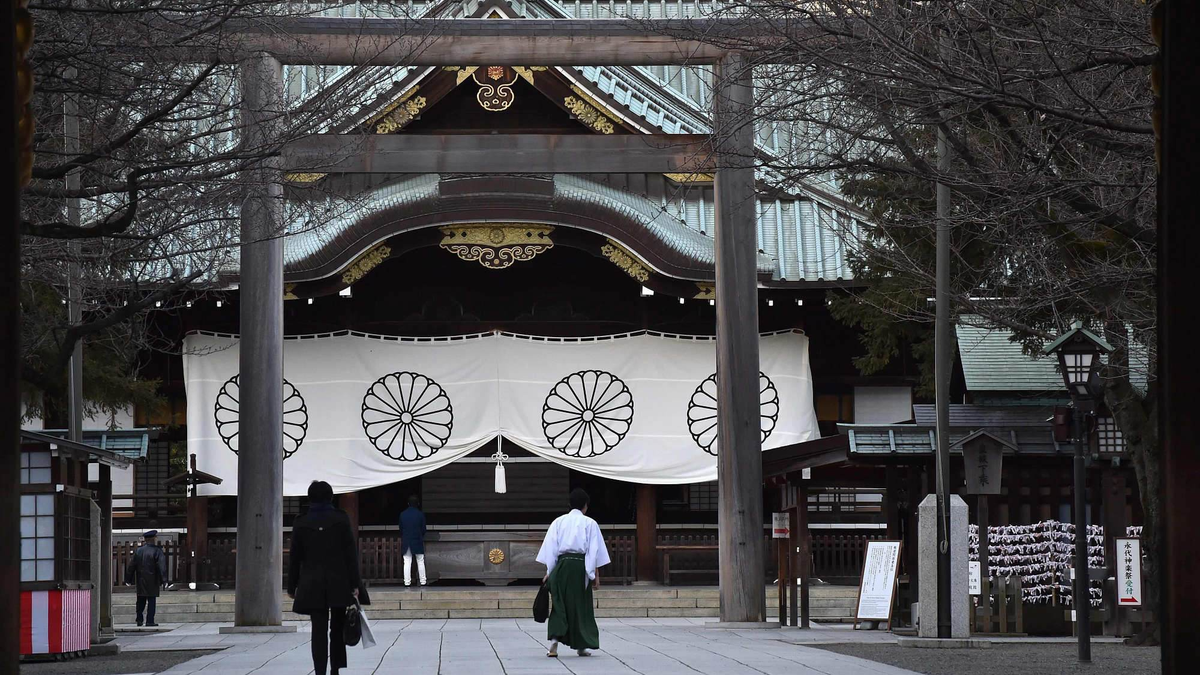
Japan is home to tens of thousands of Shinto shrines, but none is as politically and historically contentious as Yasukuni Shrine in central Tokyo. Dedicated to around 2.5 million Japanese war dead, the site has long been a source of anger and grief across Asia due to its inclusion of 14 Class-A war criminals convicted by the International Military Tribunal for the Far East.
Visits by Japanese political leaders to Yasukuni have repeatedly triggered diplomatic backlash, particularly from China and South Korea, where memories of Japanese wartime occupation remain deeply painful. Critics argue that such visits appear to legitimize Japan’s militarist past rather than acknowledge the suffering inflicted across Asia.
Supporters of the shrine often insist it is merely a place of spiritual remembrance. Yet the physical and symbolic landscape of Yasukuni tells a more complicated story. Bas-reliefs on stone lanterns depict Japan’s imperial wars—including the First Sino-Japanese War and colonial campaigns in Taiwan—as military “achievements,” with little acknowledgement of civilian suffering. These artistic choices reinforce the perception that the shrine glorifies, rather than mourns, wartime violence.
Among those enshrined is former prime minister Hideki Tojo, a central figure in Japan’s wartime leadership who was executed for war crimes. He is honored as a “Showa Martyr,” a designation that continues to shock victims of Japan’s aggression.
The controversy extends to the Yūshūkan museum, operated by the shrine itself. The museum’s exhibits present a heavily revisionist account of history, minimizing or omitting well-documented atrocities such as the Nanjing Massacre, the use of forced labor, medical experiments on civilians, and the system of sexual slavery imposed on so-called “comfort women.” In some cases, responsibility for violence is subtly shifted away from Japan altogether.
Unlike many historical museums, Yūshūkan provides no Chinese or Korean-language explanations, reinforcing perceptions that the site is not intended for reconciliation. Critics argue that its narrative serves a small but influential nationalist audience rather than historical truth.
As Japan prepares to mark 80 years since the end of World War II, Yasukuni once again poses a dilemma for political leaders. While the country needs a place to remember its war dead, the shrine’s symbolism makes it diplomatically toxic. For decades, official commemorations have therefore been held at Tokyo’s Nippon Budokan, deliberately avoiding Yasukuni.
Nevertheless, visits by politicians continue, each time provoking outrage abroad. For neighboring countries that endured occupation and mass violence, such gestures are seen as paying tribute not only to ordinary soldiers but also to perpetrators of some of the worst crimes of the 20th century.
Some have suggested removing or relocating the enshrined war criminals to defuse tensions, but shrine authorities argue this is impossible under Shinto theology. Others say meaningful change could still occur if the shrine openly acknowledged past atrocities, removed controversial monuments, and corrected historical distortions within its museum.
Without such steps, critics warn, Yasukuni Shrine will remain a symbol not of remembrance and reconciliation, but of unresolved history continuing to cast a shadow over Japan’s relations with Asia and its own understanding of the past.