TRENDING

Monday, 5 October 2026
----------------------
24 Rabi' Al-Thani 1448 AH
US President Donald Trump said Venezuela will no longer send oil or money to Cuba, increasing pressure on the island as Washington tightens sanctions following the capture of Venezuelan President Nicolás Maduro.
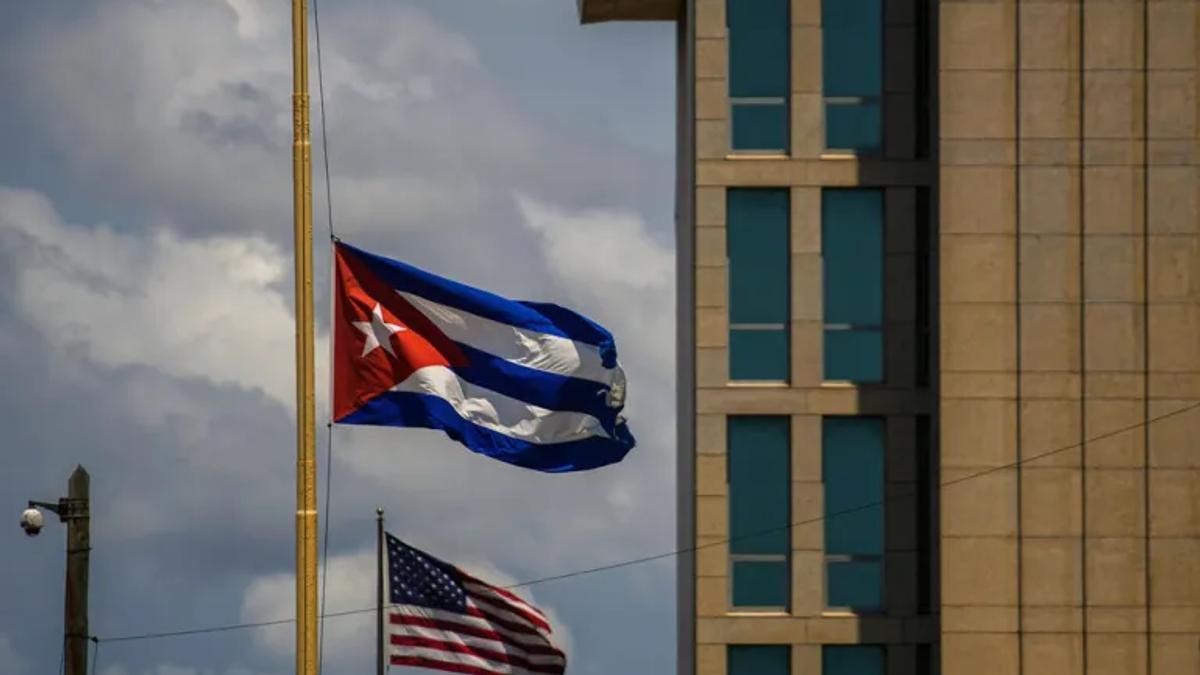
United States President Donald Trump has said that no more Venezuelan oil or financial support will be allowed to reach Cuba, escalating pressure on the communist-run island and urging its leadership to negotiate with Washington.
“THERE WILL BE NO MORE OIL OR MONEY GOING TO CUBA – ZERO! I strongly suggest they make a deal, BEFORE IT IS TOO LATE,” Trump wrote on his Truth Social platform on Sunday.
Venezuela has long been Cuba’s largest oil supplier, but no shipments have departed for the island since January 3, when US forces captured Venezuelan President Nicolás Maduro amid a tightened US oil blockade on the OPEC member, according to shipping data.
Trump said Cuba had survived for years on Venezuelan oil and financial support, though he did not specify what kind of deal he was proposing. US officials have increasingly hardened their rhetoric against Havana in recent weeks.
Earlier on Sunday, Trump also reposted a message suggesting US Secretary of State Marco Rubio could become president of Cuba, adding, “Sounds good to me!”
Cuban President Miguel Díaz-Canel rejected Trump’s comments, calling them a violation of Cuba’s sovereignty.
“Cuba is a free, independent, and sovereign nation. Nobody dictates what we do,” Díaz-Canel said in a post on X, adding that Cuba has faced US aggression for more than six decades and would defend itself if necessary.
Cuban Foreign Minister Bruno Rodríguez accused the US of behaving like an “out-of-control criminal hegemon” and said Cuba has the right to import fuel from any willing supplier. He denied that Cuba had received financial or material compensation in exchange for security services provided to other countries.
Under the US trade embargo, Cuba has relied heavily on Venezuelan oil since 2000, following an agreement reached with former Venezuelan President Hugo Chávez. Although Venezuela’s exports to Cuba have declined in recent years due to reduced refining capacity, the country still supplied about 26,500 barrels per day last year, covering roughly half of Cuba’s oil deficit, according to PDVSA documents and shipping data.
Cuba also receives smaller volumes of crude and fuel from Mexico. Mexican President Claudia Sheinbaum said last week that Mexico had not increased exports but had become an “important supplier” following recent political developments in Venezuela.
Al Jazeera correspondent Alessandro Rampietti said Cuba may struggle to replace Venezuelan supplies, noting that the country is facing its worst economic crisis since the 1990s, marked by power outages, fuel shortages, falling agricultural output and declining tourism.
Rampietti added that recent movements of US Navy warships closer to Cuba indicate increasing pressure on the island.
In Havana, residents expressed mixed reactions. Some said the government must act quickly to ease shortages, while others dismissed Trump’s threats.
“There’s no electricity, no gas, no power,” said Maria Elena Sabina, adding that ordinary people were suffering most. Another resident, Luis Alberto Jimenez, said Cubans were prepared to endure further hardship.
US analysts say Trump and Secretary of State Marco Rubio are seeking major political change in Cuba, though Washington has publicly denied pursuing regime change.
Meanwhile, observers in Washington noted that Trump’s foreign policy escalation comes as many Americans want the administration to focus on domestic economic issues, including rising costs of living.


