TRENDING

Friday, 18 September 2026
----------------------
7 Rabi' Al-Thani 1448 AH
The US approves a $24.3 billion F-35 sale to Saudi Arabia, signaling a complex dance of regional power, economic interests, and strategic risks. This deal shapes alliances, fuels conflicts, and raises questions about who truly benefits and who pays the price.
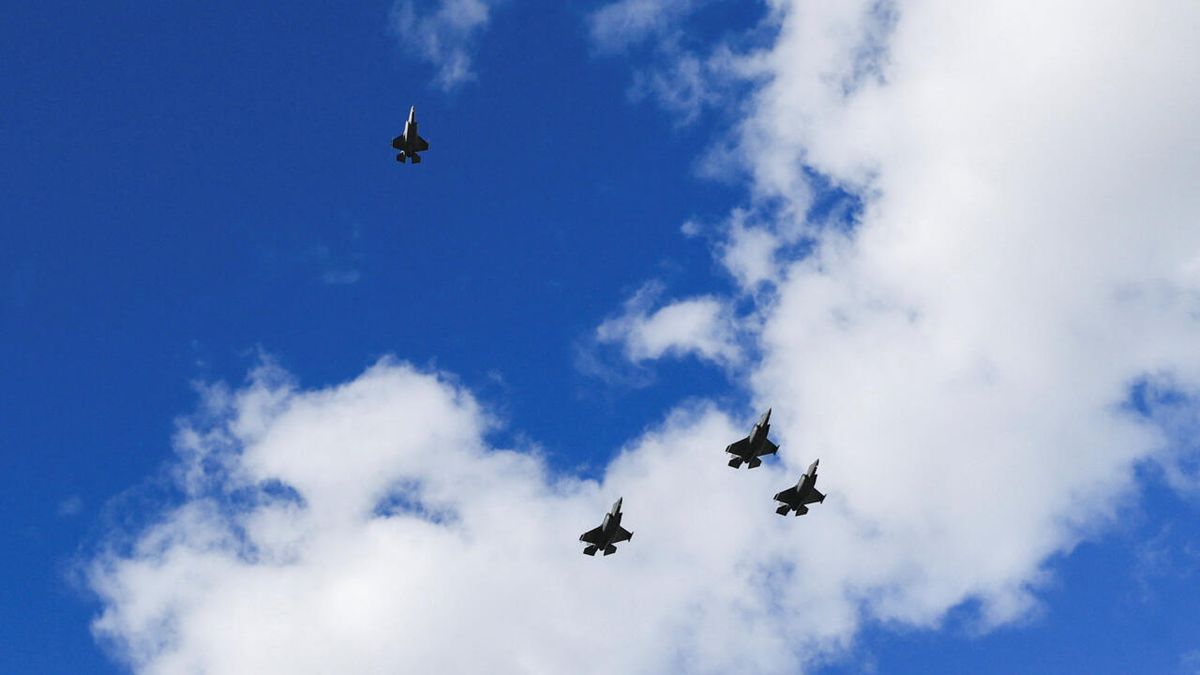
The United States State Department has approved a massive $24.3 billion sale of 48 F-35 stealth fighter jets to Saudi Arabia. This significant arms package arrives amidst heightened regional volatility, particularly since the escalation of proxy conflicts often termed the “Iran war” by official sources, and the recent resurgence of Houthi attacks targeting Saudi territory. While the deal awaits final Congressional approval, it is officially framed as a move to bolster Saudi Arabia's homeland defense capabilities and enhance its interoperability with US forces. The announcement has, however, already drawn concerns from Israel, currently the sole operator of F-35s in the Middle East, regarding its long-standing military advantage in the region.
This F-35 sale is a clear demonstration of how advanced military technology serves as a powerful tool in global power dynamics. For the United States, it represents a multi-faceted play: economically, it's a colossal boon for its defense industry, securing jobs and profits. Strategically, it deepens military ties with a crucial Gulf partner, reinforcing Washington's influence in a region vital for global energy supplies and counterbalancing Iranian power. The deal also acts as leverage, encouraging Saudi Arabia towards normalization with Israel, a key US foreign policy objective.
Saudi Arabia, in turn, leverages its vast oil wealth to acquire state-of-the-art weaponry, projecting strength and enhancing its ability to deter perceived threats from Iran and its proxies. This acquisition is not merely about defense; it's about cementing Riyadh's regional leadership and securing its long-term interests. Israel, while a close US ally, finds itself in a delicate position. Its historical “Qualitative Military Edge” (QME) is a core tenet of US policy, yet the F-35 sale to Saudi Arabia tests this principle, highlighting the complex balancing act Washington performs between its allies. Beneath the surface, the specter of China looms large. US intelligence concerns about potential Chinese espionage gaining access to F-35 technology through Saudi partnerships reveal a deeper global competition for technological supremacy and influence, turning the Middle East into a new front in the US-China rivalry.
While official statements emphasize “homeland defense,” the human cost of such massive arms transfers often falls on populations far removed from the negotiating tables. The raw intelligence explicitly mentions the reignition of Yemen's civil war and renewed Houthi attacks. The sale of F-35s, alongside previous approvals for thousands of bombs and precision guidance systems, directly fuels a conflict that has already devastated Yemen, creating one of the world's worst humanitarian crises. The people of Yemen, caught between warring factions, bear the brunt of this militarization, facing displacement, starvation, and death.
Beyond Yemen, the escalating militarization of the Middle East, driven by an arms race, increases the risk of broader regional conflicts, where ordinary civilians across multiple nations could become collateral damage. Furthermore, the billions spent on these advanced weapons by Saudi Arabia represent national resources diverted from critical domestic investments in education, healthcare, infrastructure, or economic diversification that could directly benefit its own citizens. The opportunity cost for ordinary people in the region is immense, as national wealth is channeled into military hardware rather than human development.
Official narratives often simplify complex realities. The framing of ongoing regional tensions as simply an “Iran war” by US and Saudi officials conveniently sidesteps the multifaceted historical context, including past interventions, internal political dynamics within various states, and the roles of other regional actors. This simplification serves to justify massive arms sales by painting Iran as the singular aggressor, obscuring the broader web of proxy conflicts and geopolitical rivalries.
The US State Department's assertion that the F-35 sale “will not alter the military balance in the region” is a carefully worded reassurance to Israel, but it downplays the genuine concerns of a key ally. The QME is not just a military concept; it's a political commitment, and its perceived erosion, however slight, can have significant diplomatic repercussions. Moreover, the deep intelligence community concerns regarding potential Chinese access to F-35 technology are largely omitted from public discourse. This isn't merely a technical security issue; it underscores the US's willingness to take calculated risks with its most advanced military secrets to secure strategic alignment in the Middle East, a decision driven by the larger global competition with China. The term “interoperability with US forces” also carries an unspoken implication: deeper integration means Saudi Arabia's military operations become more aligned with, and potentially subservient to, US strategic objectives, drawing the kingdom further into Washington's regional foreign policy agenda.
The immediate focus will be on the US Congress. Lawmakers will debate the F-35 sale, with potential challenges arising from human rights advocates, those concerned about the Yemen conflict's humanitarian toll, and those worried about the Chinese espionage risk. Beyond Washington, the trajectory of Saudi-Israel normalization efforts will be critical to watch. Will this major arms deal accelerate the process, or will Israel's concerns create new friction? Regionally, the sale is likely to trigger an arms race. How will Iran and its allies respond to Saudi Arabia's enhanced air power? Will other Gulf states demand similar advanced capabilities, further destabilizing the region? Finally, the long-term implications for the Yemen conflict are paramount. Will the new influx of sophisticated weaponry lead to a decisive shift, an escalation, or simply prolong the suffering of its people? The answers will shape the future of power in the Middle East.
Source referenced: FRANCE24
This brief was synthesized by our Editorial Engine and reviewed by The Ground Narrative team.


