TRENDING

Friday, 18 September 2026
----------------------
7 Rabi' Al-Thani 1448 AH
South Korean players were stunned when the North Korean anthem blared before their Asian Games game against Bangladesh. The slip reveals deeper fault lines in a tournament meant to showcase unity.
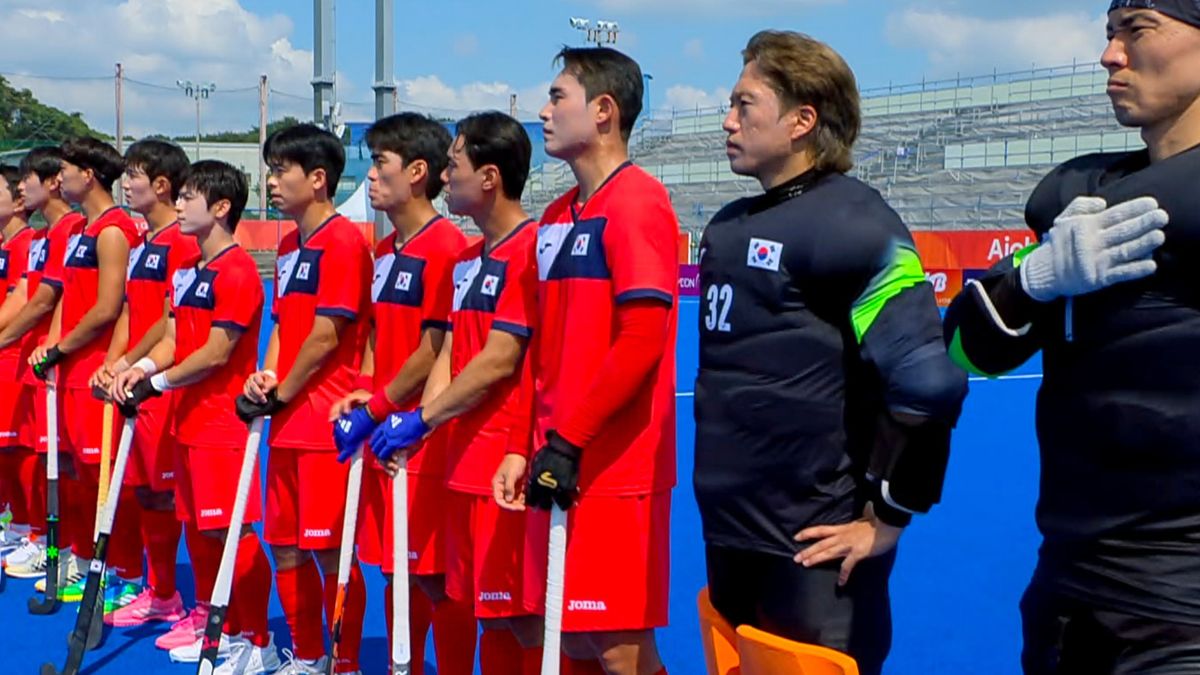
On September 18, 2026, the men’s field‑hockey match between South Korea and Bangladesh at the Asian Games in Gifu, Japan, began with an unexpected soundtrack: the North Korean national anthem. South Korean players froze, exchanged puzzled looks, and waited for the correct music. The stadium announcer quickly apologized, citing a “mistake,” and the game proceeded, ending in a 5‑0 South Korean victory. The organizing committee offered no immediate explanation, and the incident quickly spread across social media.
The error is not merely a logistical hiccup; it sits at the intersection of sports administration, inter‑Korean rivalry, and regional soft‑power contests. The Asian Games are overseen by the Olympic Council of Asia (OCA), which relies on host‑nation volunteers, local broadcasters, and a patchwork of subcontractors for event‑day operations. In Japan, a country that balances a security alliance with the United States against a cautious economic partnership with both Koreas, the pressure to deliver a flawless multinational event is intense. Mistakes become political signals.
South Korea’s ban on North Korean symbols, codified after the 1953 armistice, reflects a domestic security framework that treats any North Korean imagery as a provocation. The anthem’s accidental broadcast therefore touches on a legal regime that restricts North Korean content in South Korean media, education, and public spaces. For the OCA, the incident exposes a gap in cultural‑sensitivity protocols: a single audio file, likely mislabeled in a shared database, triggered a breach of a long‑standing legal restriction.
Behind the scenes, the incident also serves the interests of domestic actors in Seoul. The South Korean government has been vocal about the need for stricter oversight of international sporting events hosted abroad, leveraging the mishap to press for better protection of its athletes and to justify increased funding for a national sports ministry that has faced criticism over recent performance declines. Meanwhile, North Korea, isolated by sanctions, watches any international exposure of its symbols as a modest propaganda win, even if unintentional.
The immediate human cost fell on the South Korean athletes, who had to compose themselves after a jarring reminder of a conflict that still technically rages. For many players, the anthem evoked memories of families divided by the DMZ, a psychological burden that can affect performance and morale. Beyond the locker room, the incident rippled to South Korean fans, who felt a collective insult to national dignity, prompting online outrage and calls for accountability.
Bangladesh’s team, largely unnoticed in the narrative, also suffered. Their preparation was disrupted by the confusion, and the media focus shifted away from their own sporting effort to a political flashpoint they did not create. Local Japanese staff, tasked with rapid damage control, faced heightened scrutiny and stress, highlighting how frontline workers often bear the brunt of diplomatic missteps.
Official statements from the OCA and the Japanese organizing committee have been muted, framing the episode as a “technical error.” What remains unaddressed is the systemic reliance on low‑cost, outsourced audio services that lack robust verification steps for politically sensitive content. Moreover, the broader context of Japan’s delicate balancing act—hosting a pan‑Asian event while navigating security ties with the United States and economic ties with both Koreas—means that any slip can be weaponized by regional actors.
South Korean officials have hinted at filing a formal complaint, but they have not demanded a public investigation into the procedural chain that allowed the anthem to be queued. This omission protects the OCA’s reputation and avoids exposing deeper governance flaws that could embolden other nations to question the integrity of future games.
Watch how the OCA revises its cultural‑sensitivity checklist ahead of the 2027 Asian Games in Thailand. A tightened protocol could become a bargaining chip for Seoul, which may demand a seat at the audio‑content vetting table. Additionally, monitor any diplomatic chatter between Seoul and Tokyo; a quiet reprimand could evolve into a public dispute that influences future bilateral sports collaborations.
Finally, keep an eye on North Korean media coverage. Even a brief mention of the anthem’s broadcast can be amplified domestically to reinforce the regime’s narrative of international recognition, however inadvertent. The incident, while small in scale, offers a window into how sport, law, and national identity intersect in a region where old wounds remain unhealed.
Source referenced: ALJAZEERA
This brief was synthesized by our Editorial Engine and reviewed by The Ground Narrative team.