TRENDING

Friday, 6 November 2026
----------------------
26 Jumada Al-Awwal 1448 AH
Abdul El-Sayed's victory in Michigan marks a historic moment, making him the first Muslim American elected to the US Senate. His campaign openly challenged powerful lobbying groups and traditional political narratives, signaling a new era for identity and advocacy in American politics.
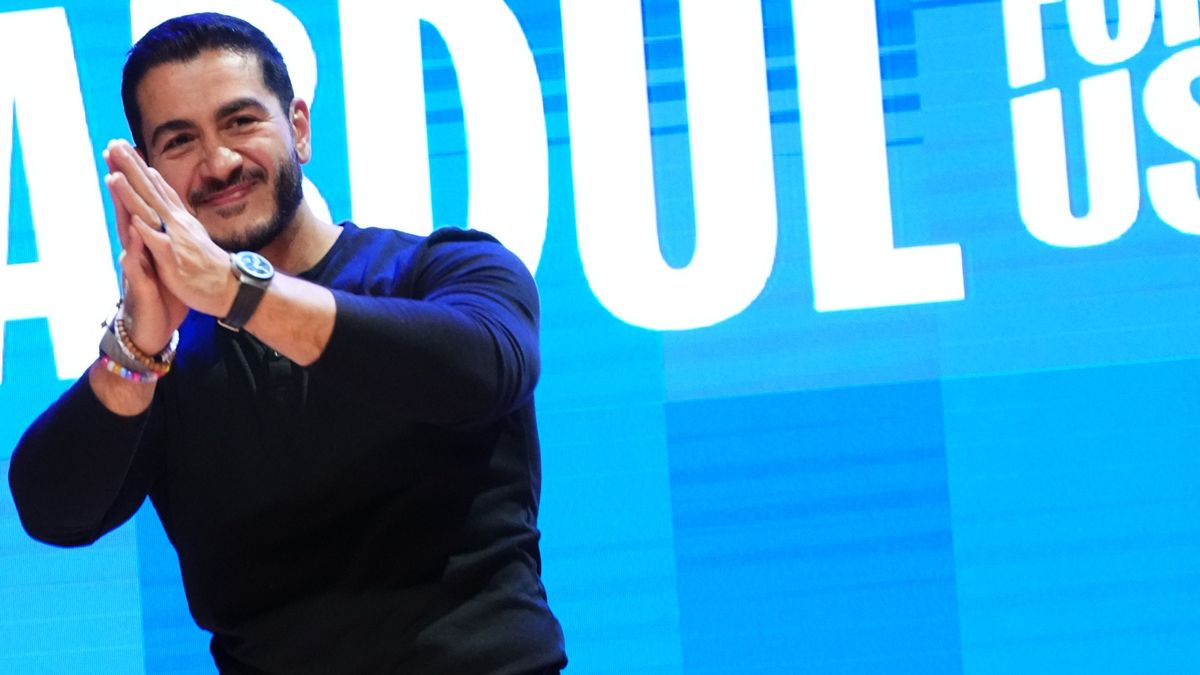
In the US Midterm Elections of 2026, Abdul El-Sayed, a physician and former Detroit health director, secured a historic victory in Michigan, becoming the first Muslim American ever elected to the United States Senate. El-Sayed defeated Republican incumbent Mike Rogers after a campaign marked by intense scrutiny over his identity and his outspoken stance on US foreign policy, particularly regarding Gaza. His win represents a significant breakthrough for Muslim American political representation and a direct challenge to established lobbying power within Washington.
El-Sayed's victory did not occur in a vacuum; it was the culmination of shifting demographic realities, an evolving political consciousness among diverse communities, and a direct confrontation with entrenched influence. The structural forces at play reveal a complex interplay of grassroots mobilization against well-funded opposition.
Michigan has long been a crucible of Muslim American life, with communities in Dearborn and Hamtramck (the first Muslim-majority city in the US) having built robust social, economic, and religious institutions over generations. This concentrated demographic, while often overlooked or taken for granted by national political machines, represents a significant and increasingly organized voting bloc. El-Sayed, a deeply embedded member of this community, understood its concerns and aspirations, allowing him to tap into a wellspring of support that transcended traditional party lines. His ability to connect with voters in small towns, industrial cities, and suburbs, visiting both churches and mosques, demonstrated an inclusive outreach strategy that acknowledged the state's diverse fabric rather than segmenting it.
Perhaps the most striking power dynamic at play was the direct challenge to the influence of the American Israel Public Affairs Committee (AIPAC). AIPAC's affiliated super PAC reportedly spent an extraordinary $30 million in Michigan's Democratic primary, an investment explicitly aimed at defeating El-Sayed due to his open opposition to US support for Israel's actions in Gaza. This level of spending is typically seen as a decisive factor in American elections, often acting as a de facto veto on candidates who deviate from certain foreign policy orthodoxies. El-Sayed's ability to overcome this financial onslaught suggests that while money remains a potent force in politics, it is not an absolute one. It highlights that a compelling candidate, deeply rooted in their community and articulating a clear platform that resonates with voters, can, at times, defy even the most well-funded opposition. This outcome will undoubtedly force a re-evaluation of lobbying strategies and their perceived invincibility.
El-Sayed's campaign consciously turned attempts to weaponize his Muslim identity and heritage into a source of strength. Opponents, including former President Donald Trump, mocked his name and insinuated that his faith made him suspect. This tactic, a common tool of political othering, aimed to disqualify him from mainstream American politics. However, El-Sayed refused to accept the premise that a Muslim must disown their community or their concerns about human rights abroad to qualify for public office. By directly addressing these attacks with dignity and then pivoting to local issues like healthcare, housing, and affordability, he demonstrated that his identity was not a liability to be downplayed but a lens through which he understood the struggles of all Michiganders. His victory speech, beginning with his full name, including the middle name
Source referenced: ALJAZEERA
This brief was synthesized by our Editorial Engine and reviewed by The Ground Narrative team.


