TRENDING

Tuesday, 27 October 2026
----------------------
16 Jumada Al-Awwal 1448 AH
The Rwanda-backed M23 armed group has been accused of forcibly recruiting and detaining thousands in the eastern Democratic Republic of Congo, raising concerns about regional stability and the humanitarian crisis.
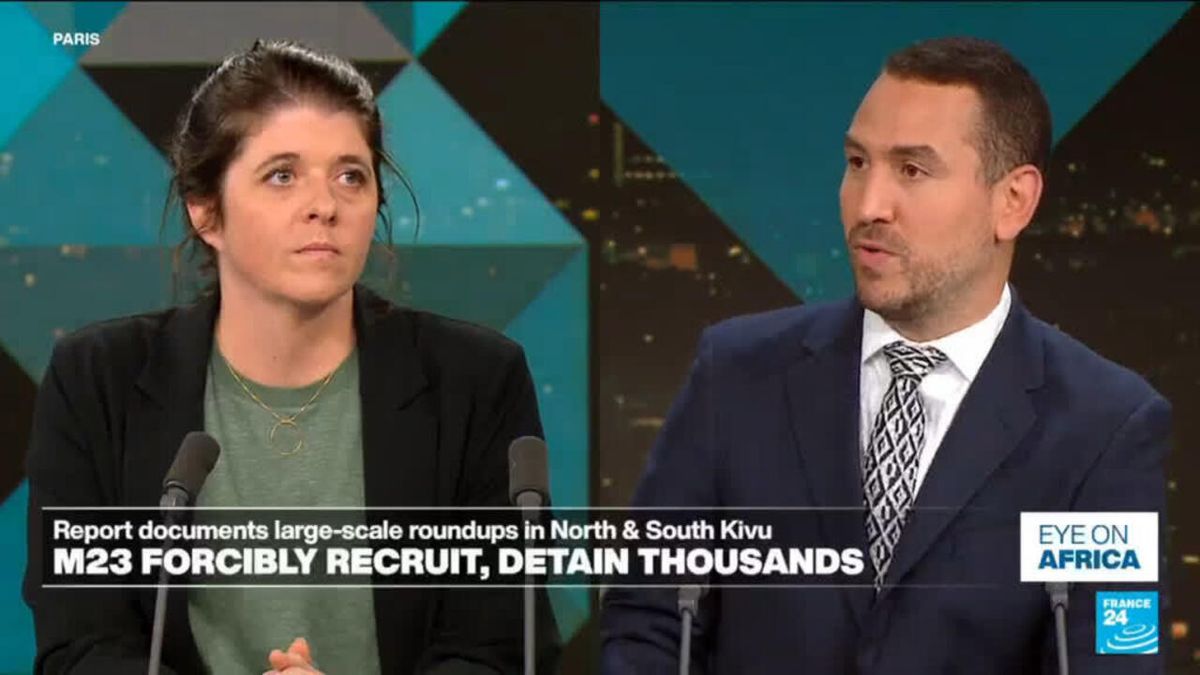
The recent report by Human Rights Watch (HRW) detailing the M23 armed group's human rights abuses in the Democratic Republic of Congo (DRC) has sparked widespread concern about the escalating conflict in the region. The M23, backed by Rwanda, has been accused of forcibly recruiting and detaining thousands of people in inhumane conditions, exacerbating the already dire humanitarian crisis in the eastern DRC.
The conflict in the DRC has been ongoing for over 30 years, with various armed groups vying for control of the region's rich natural resources. The M23's resurgence in 2021 has been particularly concerning, as it has seized vast swathes of territory and displaced thousands of civilians. The group's actions have been characterized by brutal tactics, including forced recruitment, torture, and extrajudicial killings.
The M23's human rights abuses are not merely a humanitarian issue, but also a strategic concern for regional stability. Rwanda's backing of the M23 has been a point of contention between Kinshasa and Kigali, with the DRC accusing Rwanda of supporting the group's activities. This has led to increased tensions between the two countries, with the potential for further escalation.
The M23's actions have significant implications for regional stability, particularly in the Great Lakes region. The conflict has already led to the displacement of thousands of people, with many more at risk of being forced to flee their homes. The humanitarian crisis is further complicated by the presence of other armed groups in the region, including the Allied Democratic Forces (ADF) and the Mai Mai Yakutumba.
The consequences of the M23's human rights abuses will be far-reaching, with potential implications for regional stability, humanitarian aid, and international relations. The international community must take a unified stance against the M23's actions, and work with the DRC government to address the root causes of the conflict. This includes supporting efforts to disarm and demobilize the M23, as well as providing humanitarian aid to those affected by the conflict.
Editor's Note: Some aspects of the analysis are uncertain, including the full extent of Rwanda's involvement in the conflict.
Source referenced: FRANCE24
This brief was synthesized by our Editorial Engine and reviewed by The Ground Narrative team.