TRENDING

Monday, 5 October 2026
----------------------
24 Rabi' Al-Thani 1448 AH
China's Foreign Ministry publicly urged Japan to uphold its non-nuclear principles, citing strong public opposition to nuclear weapons. This intervention highlights the escalating regional anxieties over Japan's potential shift in defense posture and its broader implications for East Asian stability.
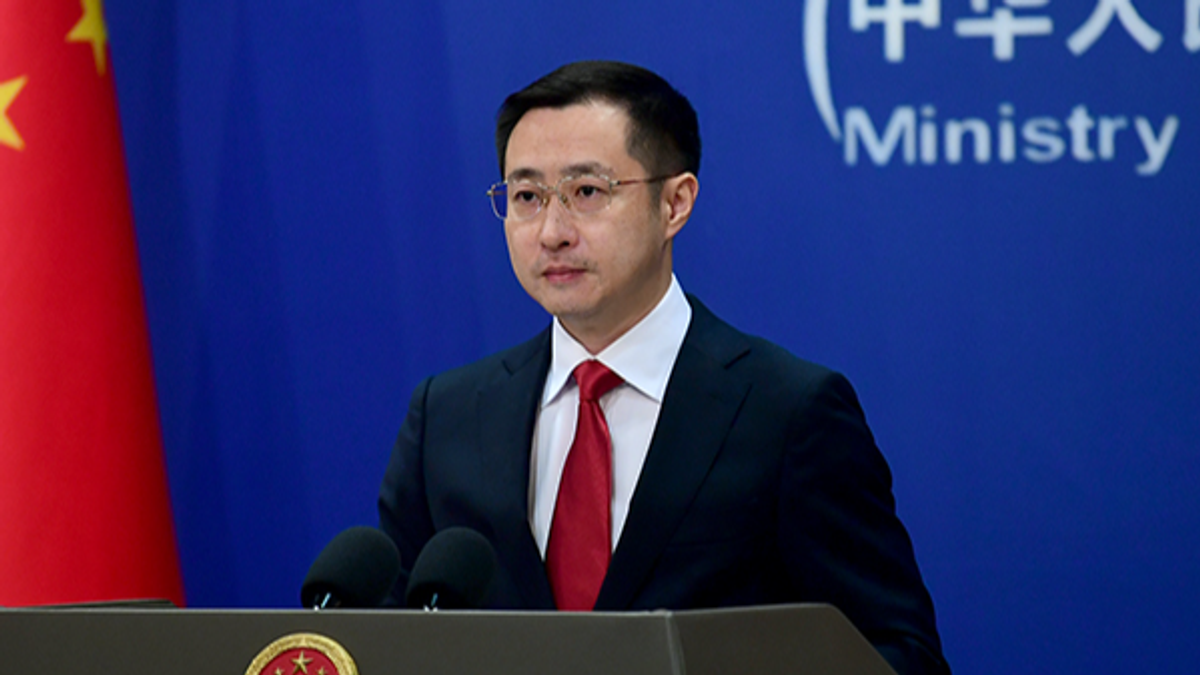
China's Foreign Ministry, through spokesperson Lin Jian, publicly called on Japan to adhere to its long-standing "three non-nuclear principles"—not to possess, produce, or permit nuclear weapons on its territory. This appeal followed a recent Japanese poll indicating overwhelming public opposition to nuclear sharing or indigenous nuclear capabilities. Beijing specifically accused "Japanese right-wing forces" of "clamoring for the 'nuclear option'" and risking the future of its citizens, urging Tokyo to heed public opinion and fulfill its international obligations.
Japan, a nation constitutionally committed to pacifism since World War II, has maintained its non-nuclear principles as a cornerstone of its national identity and foreign policy. However, the rapidly deteriorating security environment in East Asia, driven by North Korea's advancing nuclear program and China's assertive military expansion, has fueled a contentious debate among some conservative Japanese politicians. These voices advocate for re-evaluating Japan's defense posture, including potentially exploring "nuclear sharing" arrangements with the United States or even developing an indigenous nuclear deterrent. Such a move would fundamentally alter the regional power balance and challenge the existing non-proliferation regime.
Beijing's intervention serves multiple strategic purposes. Firstly, it leverages strong Japanese public sentiment against nuclear weapons to exert pressure on the Japanese government, framing any deviation from non-nuclear principles as a defiance of its own people's will. Secondly, a nuclear-armed Japan would be perceived as a direct threat to China's regional dominance, likely triggering a dangerous arms race and escalating military tensions. Thirdly, China's statement taps into deep-seated historical anxieties in the region, particularly memories of World War II, to delegitimize any Japanese move towards nuclearization. Finally, it's a clear diplomatic warning aimed at deterring Japan from pursuing a nuclear option, while also implicitly challenging the credibility of the US-Japan security alliance by highlighting internal Japanese dissent.
The most immediate stakeholders in this debate are the Japanese people, particularly those who carry the historical memory and trauma of the atomic bombings of Hiroshima and Nagasaki. Their overwhelming support for non-nuclear principles is not merely political; it is deeply rooted in a national commitment to peace and a profound understanding of nuclear devastation. While Beijing uses their voices for its own strategic ends, their anxieties about a nuclear future are profoundly genuine. Beyond Japan, populations across East Asia, including in South Korea, Taiwan, and Southeast Asia, stand to bear the human cost of any regional nuclear proliferation. An arms race would not only heighten the risk of conflict but also divert immense resources from critical social welfare, economic development, and environmental protection, impacting the daily lives and futures of millions. The very idea of increased militarization means less investment in education, healthcare, and infrastructure for ordinary citizens.
Official statements from Beijing focus on Japanese "right-wing forces" and public opinion, but they largely omit the crucial role of the United States in this evolving dynamic. The underlying pressure on Japan to consider nuclear options is not solely an internal Japanese phenomenon; it is a direct consequence of perceived shifts in the credibility of the US extended deterrence (the nuclear umbrella) and the broader US strategy in the Indo-Pacific. Washington, while publicly supporting non-proliferation, might quietly encourage its key allies like Japan to take on greater defense responsibilities, including potentially exploring "nuclear sharing" arrangements, to bolster deterrence against China and burden-share. This nuanced, often unspoken, aspect of US foreign policy is critical to understanding Japan's internal debate but is conveniently left out of China's public rhetoric.
Furthermore, the global implications for the Nuclear Non-Proliferation Treaty (NPT) are rarely given the attention they deserve. If Japan, a technologically advanced nation with a strong non-proliferation record and a unique historical experience with nuclear weapons, were to seriously consider acquiring them, it would deliver a severe blow to the NPT regime. Such a move could set a dangerous precedent, potentially unraveling decades of international efforts to prevent the spread of nuclear weapons and encouraging other states to pursue their own arsenals.
Readers should closely observe Japan's upcoming domestic political debates and elections. Any shifts in the stance of the ruling Liberal Democratic Party (LDP) or its coalition partners on defense policy, particularly concerning nuclear options, will be highly indicative. The nature and content of US-Japan security dialogues will also be crucial, as they will reveal the extent to which Washington and Tokyo are discussing enhanced deterrence, including potential nuclear sharing arrangements. North Korea's continued missile and nuclear provocations will remain a significant external factor, potentially fueling calls within Japan for a more robust defense posture. Finally, China's ongoing military modernization and assertive actions in the East China Sea and Taiwan Strait will continue to be the primary drivers of Japan's security anxieties, shaping its strategic calculus in the years to come.
Source referenced: CGTN
This brief was synthesized by our Editorial Engine and reviewed by The Ground Narrative team.


