TRENDING

Monday, 5 October 2026
----------------------
24 Rabi' Al-Thani 1448 AH
Thousands of Irish farmers staged tractor-led protests across the country, opposing the EU–Mercosur trade deal, warning it could undermine domestic agriculture, weaken food standards and flood markets with cheaper South American imports.
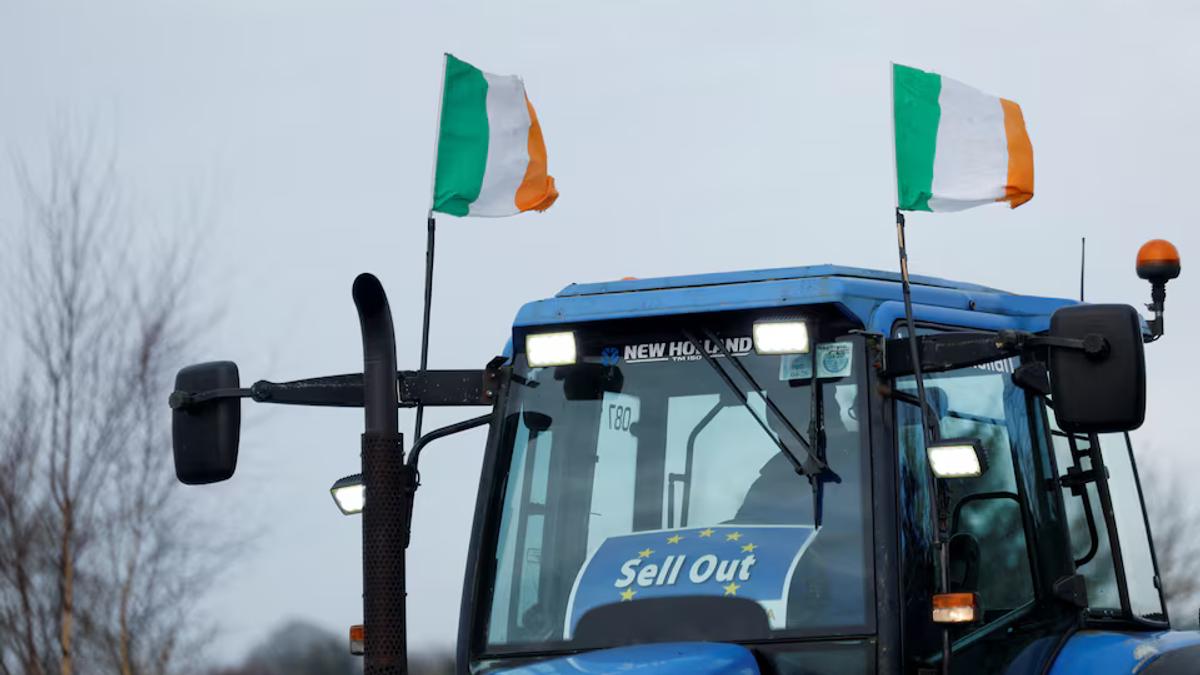
Thousands of Irish farmers took to the streets on Saturday in coordinated protests across the country, many travelling long distances on tractors, to oppose the European Union’s proposed Mercosur trade agreement with South American nations.
The demonstrations followed a provisional green light for the deal by a majority of EU member states on Friday, paving the way for what would become the bloc’s largest free-trade agreement. Opposition led by France, the EU’s biggest agricultural producer, failed to persuade enough countries that the accord would harm European farmers by increasing imports of cheaper food products.
In Ireland, resistance to the deal has grown amid pressure from opposition parties, farming organisations and members of the governing coalition. The Irish government has argued that the agreement lacks sufficient safeguards, particularly around food safety standards, which it says are weaker in parts of South America.
Speaking at a protest in Athlone, farmer Joe Keogh warned that the deal could devastate rural communities. “It’s an absolute disgrace on behalf of the farmers and people that have put Europe where it is today,” he said. “It’s going to close down the whole countryside.”
Protesters carried placards reading “Don’t sacrifice family farms for German cars,” “Our cows follow the rules, why don’t theirs,” and “Sell out,” reflecting fears that European farmers would be undercut by imports produced under different regulatory regimes.
Saturday’s rally, large by Irish standards, followed similar demonstrations held on Friday in Poland, France and Belgium, highlighting growing agricultural unrest across Europe.
While Ireland is a small export-driven economy seeking to reduce its dependence on the United States market, agriculture remains a cornerstone of rural employment, particularly in the beef and dairy sectors. Farmers argue that increased competition from Mercosur countries would place additional strain on an industry already operating on narrow margins.
Opponents of the deal have secured some concessions and compensation measures for EU farmers, but critics say these do not go far enough to offset the long-term risks.
The agreement must still be approved by the European Parliament before coming into force. Ireland, alongside France, has pledged to oppose ratification, setting the stage for what is expected to be a closely contested vote.
Farmer Niamh O’Brien, who travelled from western Ireland to attend the protest, said the issue extended beyond livelihoods. “The Irish farmer is at great risk as it is,” she said. “But this is also about the quality of the food we are eating. It has severe implications for both farmers and consumers.”


