TRENDING

Monday, 5 October 2026
----------------------
24 Rabi' Al-Thani 1448 AH
Iran’s national currency has fallen to historic lows as a new government budget points to shrinking public spending, rising taxes and wages lagging far behind inflation. With sanctions tightening and inflation near 50 percent, economists warn living standards for millions are set to deteriorate further.
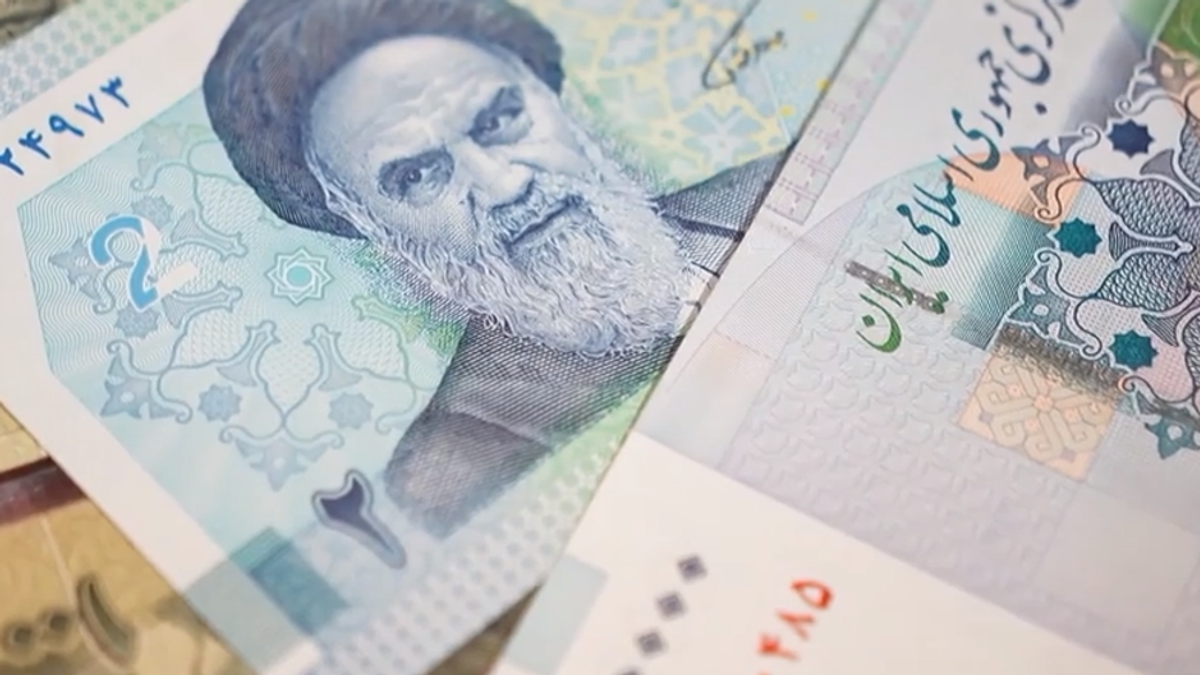
Iran’s currency has plunged to unprecedented levels amid mounting economic pressure, highlighting the depth of the country’s financial crisis as authorities prepare for another year of constrained public spending.
In Tehran’s open market, the rial briefly traded at around 1.36 million to the US dollar on Wednesday, its weakest level on record before slightly recovering the following day. The sharp decline comes as sanctions pressure intensifies and fears persist over renewed conflict in the region.
The currency slump coincides with the submission of the government’s proposed budget for the next Iranian calendar year, which begins in late March. President Masoud Pezeshkian has sent the final draft to parliament, where it must be approved by lawmakers and vetted by the Guardian Council before becoming law.
Although the budget shows a nominal increase of just over five percent compared with last year, inflation is hovering around 50 percent. This effectively signals a contraction in real government spending as officials attempt to manage what they describe as a “resistance economy” under severe financial constraints.
Minimum wages are set to rise by only 20 percent, far below inflation meaning most Iranians are likely to see their purchasing power decline further as prices continue to rise and the rial weakens.
The budget also forecasts a sharp 62 percent increase in tax revenues, reflecting the government’s efforts to reduce reliance on oil income as US sanctions continue to target Iranian exports, much of which are shipped discreetly to China.
Converted at the current exchange rate, the total budget is valued at roughly $106bn, significantly lower than the projected spending plans of regional peers such as Turkiye, Saudi Arabia and Israel.
Iran’s multi-tier exchange rate system remains in place, with different rates applied for customs duties, budget calculations and oil revenues. However, a long-standing subsidized exchange rate has been scrapped, freeing up funds that the government says will be redistributed to low-income households through electronic vouchers for essential goods.
For the first time, the budget has been drafted in “new rials,” anticipating the removal of four zeros from the currency, a measure approved by parliament in October. While officials argue the change is administratively necessary, economists widely agree it will do little to curb inflation or stabilize the currency.
Public reaction has been largely negative. Many Iranians have criticized the widening gap between wages and inflation, while others fear that ending subsidized exchange rates for basic goods could trigger another wave of price increases.
Economic pressures are also being compounded by rising fuel costs. Earlier this month, authorities increased petroleum price caps despite earlier assurances to the contrary. Transport costs have since climbed, adding further momentum to inflation.
Government officials insist relief measures are on the way. Hamid Pourmohammadi, head of Iran’s Plan and Budget Organization, said a new multi-point economic plan would soon be unveiled to ease pressure on households and businesses.
However, analysts warn that unless deep structural problems, including persistent budget deficits and fragile banks are addressed, inflation and currency instability are likely to worsen, placing an ever-heavier burden on Iran’s 90 million citizens.


