TRENDING

Tuesday, 22 September 2026
----------------------
11 Rabi' Al-Thani 1448 AH
Germany's Defence Minister Boris Pistorius has publicly attributed the re-closure of the vital Strait of Hormuz to former US President Donald Trump's policies, underscoring deep transatlantic divisions over Middle East strategy. The move by Iran, citing Israeli actions in Lebanon, highlights the Strait's vulnerability and its critical role in global energy security.
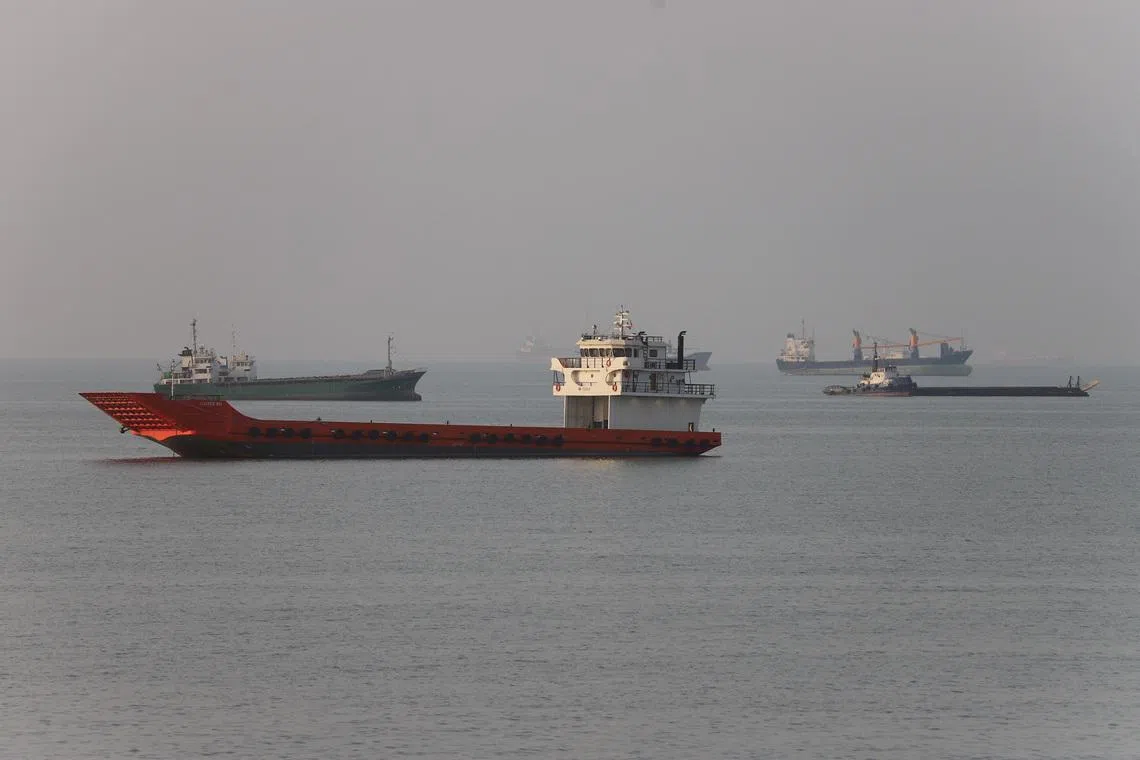
On June 21, German Defence Minister Boris Pistorius issued a pointed critique, directly blaming former US President Donald Trump for the re-closure of the Strait of Hormuz. This statement, made during an interview with broadcaster ARD, underscores a significant divergence in transatlantic foreign policy approaches and highlights the escalating geopolitical tensions surrounding one of the world's most critical maritime chokepoints. The Strait, a vital conduit for global oil and gas shipments, was effectively blockaded following renewed hostilities in the region.
The immediate trigger for the latest closure, announced by Iran on June 20, was cited as "Israeli attacks in Lebanon." This action by Tehran reversed a preliminary accord signed between Trump and his Iranian counterpart Masoud Pezeshkian, which had seen shipping traffic begin to recover after an initial blockade. The initial hostilities, which commenced on February 28, were described as "US-Israeli attacks on Iran," setting the stage for the current instability.
Pistorius's accusation, stating that "Ultimately, the cork in the bottle neck of the Strait of Hormuz was pushed in by Donald Trump, not by us, but we have an interest in getting it out again," reflects a long-standing German and broader European frustration with what they perceive as unilateral US foreign policy under the previous Trump administration. Berlin has consistently distanced itself from Trump's aggressive stance against Iran, though officials had previously refrained from directly blaming the US for the conflict's genesis. The German minister emphasized Europe's vested interest in the Strait's reopening, citing its critical importance for the continent's energy supply and economic recovery.
This public blame game is not an isolated incident but rather a manifestation of deeper transatlantic rifts concerning Middle East policy. German Chancellor Friedrich Merz had previously dismissed calls from Trump in April to help secure the Strait, stating unequivocally that the conflict was "not a matter for NATO." Both Merz and Pistorius have also criticized the United States for failing to consult its allies before initiating strikes on Iran. This consistent German position highlights a desire for greater European strategic autonomy and a preference for diplomatic solutions over military confrontation in the region.
From a geopolitical standpoint, the closure of the Strait of Hormuz carries immense weight. Approximately one-fifth of the world's total oil consumption and a significant portion of its liquefied natural gas (LNG) pass through this narrow waterway. Its disruption sends immediate shockwaves through global energy markets, impacting prices and supply chains worldwide. For Europe, already grappling with energy security concerns, the closure represents a direct threat to its economic stability and recovery efforts.
Iran's decision to re-close the Strait, explicitly linking it to Israeli actions in Lebanon, underscores its strategic leverage over global maritime trade and its willingness to use this leverage as a retaliatory measure against perceived aggression. This linkage demonstrates the highly interconnected nature of conflicts in the Middle East, where actions in one theater can have profound and immediate consequences across the entire region and beyond. It suggests a broader strategy by Iran to deter or respond to attacks by projecting power through its control over vital chokepoints.
The preliminary accord between Trump and Pezeshkian, which briefly saw the Strait reopen, indicates a transactional approach to regional stability. However, the fragility of such agreements is evident in the swift re-closure, demonstrating that any diplomatic solution must address the underlying regional tensions and security concerns of all parties involved, particularly Iran's perception of its own security and sovereignty.
The ongoing situation in the Strait of Hormuz poses significant challenges to international law and the principle of freedom of navigation. It also complicates future diplomatic efforts to de-escalate tensions in the Middle East and to address the broader Iranian nuclear program. The German government's insistence that any agreement to reopen the Strait would require the support of both Iran and Oman highlights the necessity of multilateral engagement and regional buy-in for sustainable solutions.
Ultimately, the German minister's statement serves as a stark reminder of how past policy decisions, particularly those perceived as unilateral or confrontational, can have lasting and destabilizing effects on global security and economic stability. The crisis in the Strait of Hormuz is not merely a regional dispute but a critical test of international diplomacy, energy security, and the future of transatlantic cooperation in navigating complex geopolitical challenges.