TRENDING

Monday, 19 October 2026
----------------------
8 Jumada Al-Awwal 1448 AH
A new railway corridor from Nanning is deepening China's economic ties with Southeast Asia, promising new trade routes but also raising questions about regional power dynamics. This infrastructure push is a critical component of Beijing's broader economic and strategic ambitions.
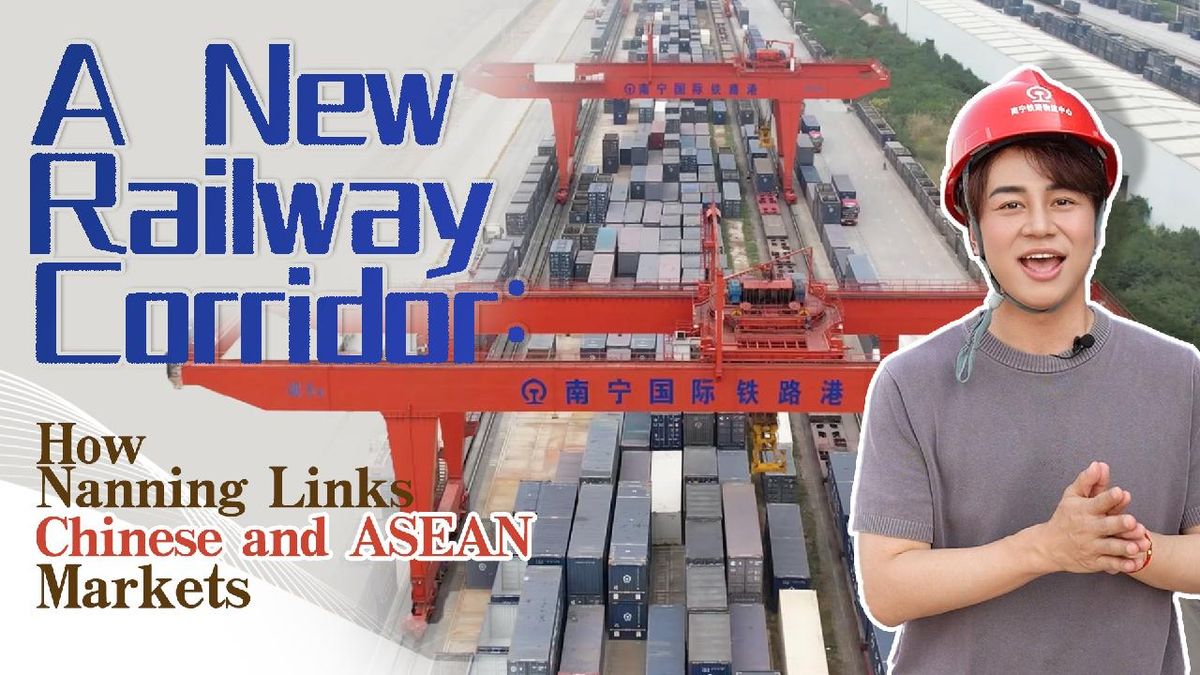
From Nanning, the capital of China's Guangxi Zhuang Autonomous Region, a new railway corridor is rapidly expanding its reach across Southeast Asia. This rail network, centered around the Nanning International Railway Port, serves as a crucial artery within China's ambitious New International Land-Sea Trade Corridor (ILSTC). It facilitates the movement of goods from China's southwestern provinces directly into ASEAN markets, bypassing traditional coastal shipping routes and aiming to integrate the region into a more cohesive, China-centric economic sphere.
This railway corridor is far more than just a transportation upgrade; it is a tangible manifestation of China's long-term strategy to reconfigure regional and global trade flows. At its core, the ILSTC, of which the Nanning hub is a critical component, is designed to reduce China's reliance on the vulnerable Malacca Strait for trade with Europe, Africa, and the Middle East, while simultaneously deepening economic integration with Southeast Asia. By establishing new land-sea linkages, China aims to create alternative, more secure supply chains and project its economic influence southward.
The power dynamic here is one of infrastructure-led dependency. China, with its vast state-backed financial resources and engineering capabilities, offers much-needed infrastructure development to nations in Southeast Asia. For many ASEAN member states, particularly those with less developed transport networks like Laos, Cambodia, and Myanmar, these projects promise economic growth, access to larger markets, and job creation. However, these benefits often come with substantial loans, creating a complex web of financial obligations that can translate into political leverage for Beijing. The terms of these agreements, often opaque, can grant China significant control over strategic assets and future economic policy decisions of the recipient nations.
Furthermore, the corridor strengthens China's position as the indispensable economic partner in the region. By channeling trade through Chinese-built and often Chinese-operated infrastructure, Beijing effectively positions itself as the central node in a vast regional logistics network. This fosters a sinocentric economic gravity, where the economic fortunes of neighboring countries become increasingly tied to China's growth and policy decisions. It's a calculated move to solidify China's sphere of influence, presenting a compelling economic alternative to the traditional Western-led global trade order.
While official narratives highlight "new opportunities" and "closer regional ties," the construction and operation of such massive infrastructure projects inevitably carry significant human costs, often borne disproportionately by ordinary citizens.
Large-scale railway construction requires extensive land acquisition. Communities, often rural and agrarian, are displaced from ancestral lands with compensation that may be inadequate or delayed. Traditional livelihoods, such as small-scale farming, fishing, or local trading, can be destroyed as land is repurposed for rail lines, logistics hubs, or industrial zones. The promised new jobs often require different skill sets or are filled by migrant workers, leaving locals marginalized.
Many of the smaller ASEAN nations entering into these infrastructure agreements are taking on substantial debt. While the projects promise long-term economic benefits, the immediate burden of repayment falls on national treasuries, potentially diverting funds from essential public services like healthcare, education, or social welfare. If projects fail to generate the projected returns, these nations risk falling into a debt trap, where they struggle to service their loans, potentially leading to the forfeiture of strategic assets or increased political concessions to the creditor nation. This burden is ultimately paid by the taxpayers and future generations of these countries.
Railway corridors often cut through diverse and sensitive ecosystems, including forests, wetlands, and agricultural lands. Construction can lead to deforestation, habitat fragmentation, soil erosion, and water pollution. While environmental impact assessments are often conducted, their rigor and enforcement can vary significantly, especially in developing nations eager for investment. The long-term ecological consequences can impact local communities dependent on natural resources for their sustenance and cultural heritage.
While large businesses and export-oriented industries might benefit significantly from improved logistics, smaller local enterprises and informal economies can struggle to compete. The influx of cheaper Chinese goods via efficient rail links could overwhelm nascent local industries, leading to job losses and economic dislocation in certain sectors. The benefits are often concentrated in specific urban centers or industrial zones, leaving rural areas or less connected communities behind.
Behind the official pronouncements of "win-win cooperation" and "shared prosperity," several critical dimensions of China's railway corridor strategy remain underplayed or entirely omitted by powerful actors, both in Beijing and often in the capitals of recipient nations.
China's drive to build these corridors is not solely about economic efficiency; it is a profound strategic imperative. The Malacca Strait, a narrow waterway between Malaysia and Indonesia, is a critical choke point for over 80% of China's maritime trade, including vital energy imports. In a geopolitical crisis, this route could be easily interdicted by rival naval powers, particularly the United States. By developing the ILSTC and its railway components, China is actively diversifying its trade routes, enhancing its energy security, and reducing its vulnerability to maritime blockades. This is a clear move to bolster its strategic resilience and project power, a dimension rarely emphasized in public statements.
Many of these infrastructure projects are not just about physical connectivity. They often come bundled with digital infrastructure – fiber optic cables, 5G networks, and smart city technologies – forming part of China's broader Digital Silk Road. This digital layer allows for extensive data collection, surveillance capabilities, and the establishment of technical standards that favor Chinese companies. While presented as modernization, it raises concerns about data sovereignty, cybersecurity, and the potential for increased digital control and influence over partner nations' critical information infrastructure. The long-term implications for national security and individual privacy are rarely discussed openly.
Beyond external projection, the railway corridor serves significant internal Chinese motivations. It provides a crucial outlet for China's vast industrial overcapacity in steel, cement, and construction services, particularly after years of massive domestic infrastructure build-out. It also aims to stimulate economic development in China's less developed western provinces, such as Yunnan and Guangxi, by connecting them directly to lucrative Southeast Asian markets. This internal economic driver, while beneficial to China, is often framed purely as a benevolent initiative for regional development.
One of the most significant untold stories is the relative absence of a coherent, equally compelling alternative development model from Western powers or other regional players like Japan or India. While these nations express concerns about China's influence, their own infrastructure investment initiatives often lack the scale, speed, or coordinated financing mechanisms to compete effectively with China's Belt and Road Initiative (BRI). This leaves many developing nations in Southeast Asia with limited choices, making China's offer appear as the only viable path to rapid modernization, despite its potential drawbacks.
As the Nanning rail corridor and the broader ILSTC continue to expand, several key indicators will reveal the true long-term impacts and the evolving power dynamics in Southeast Asia.
First, closely monitor the debt sustainability of the recipient nations. Watch for any signs of financial distress, renegotiation of loan terms, or the potential forfeiture of strategic assets to China. The financial health of countries like Laos and Cambodia, which have heavily invested in Chinese infrastructure, will be particularly telling.
Second, observe the trade balance and economic integration patterns. Will the corridor lead to genuine industrial development and diversified exports from ASEAN nations, or will it primarily serve as a conduit for Chinese goods and raw material extraction? Look for evidence of local value chain development versus increased dependency on China as a market and supplier.
Third, pay attention to local grievances and environmental compliance. Reports of community displacement, labor disputes, or ecological damage will indicate the human and environmental costs that are often downplayed in official narratives. The transparency and effectiveness of environmental impact mitigation efforts will be crucial.
Finally, watch how ASEAN nations navigate their geopolitical balancing act. As China's economic gravitational pull strengthens, observe how individual countries maintain their sovereignty and forge relationships with other major powers like the United States, Japan, and India. Any shifts in foreign policy or defense alignments could signal a reaction to, or acceptance of, China's growing regional dominance. The long-term stability and autonomy of Southeast Asia will hinge on these delicate calculations.
The ILSTC is a key component of China's Belt and Road Initiative, aiming to connect China's western regions with Southeast Asia and beyond via a network of railways, roads, and sea routes. It provides an alternative to traditional maritime shipping, particularly through the Malacca Strait.
The corridor offers ASEAN nations improved connectivity, potential economic growth, and access to Chinese markets. However, it also raises concerns about debt sustainability, potential displacement of local communities, environmental impact, and increased economic dependence on China.
Beyond economic benefits, China seeks to enhance its energy security by diversifying trade routes away from vulnerable maritime choke points like the Malacca Strait. It also aims to develop its western provinces and solidify its economic and geopolitical influence in Southeast Asia.
Source referenced: CGTN
This brief was synthesized by our Editorial Engine and reviewed by The Ground Narrative team.


