TRENDING

Monday, 5 October 2026
----------------------
24 Rabi' Al-Thani 1448 AH
Ceremony for 300,000 victims underscores fading survivor ranks and calls on Japan to confront its wartime past
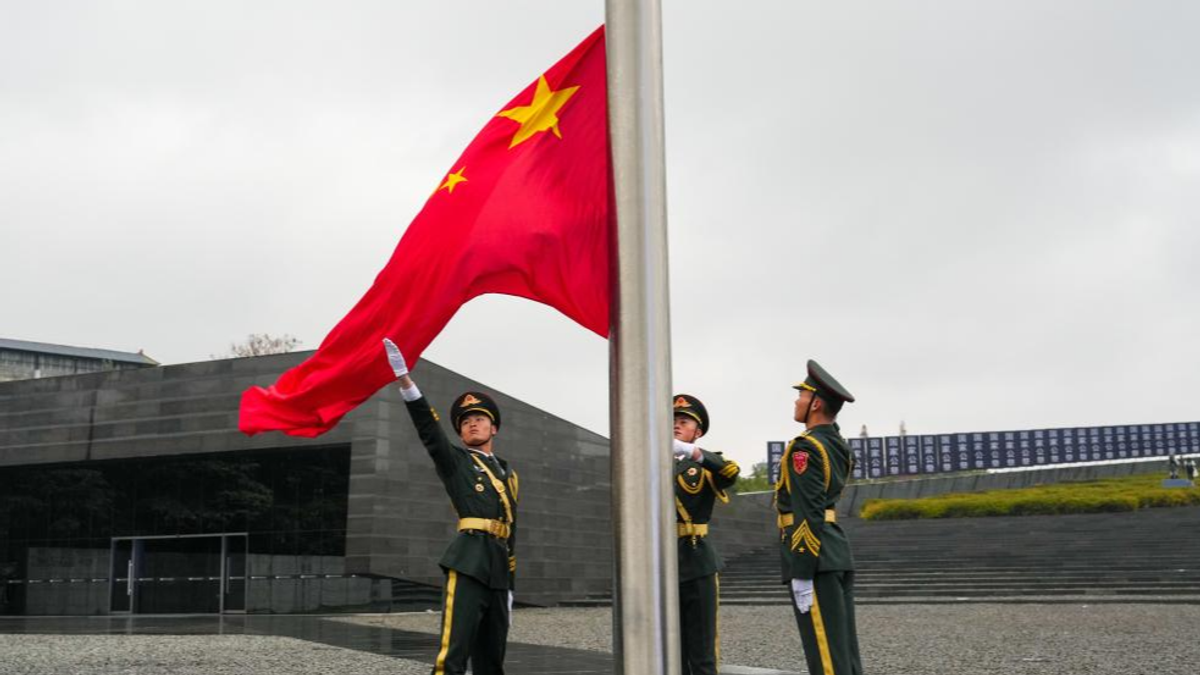
The Chinese mainland observed its 12th national memorial day on Saturday to remember the roughly 300,000 people killed by invading Japanese troops during the Nanjing Massacre, coinciding this year with the 80th anniversary of the end of World War II. Thousands of people in dark clothing gathered despite the cold at the Memorial Hall of the Victims in Nanjing, many wearing white flowers, as the national flag flew at half-mast before a crowd that included survivors, students and overseas guests.
At 10:01 a.m., air-raid sirens sounded across the city; traffic in the downtown area came to a halt as drivers honked in unison and pedestrians stood still for a moment of silence in tribute to those who died. The massacre began after Japanese forces seized Nanjing, then China’s capital, on December 13, 1937, and over six weeks carried out mass killings of civilians and disarmed soldiers in one of the most brutal chapters of the Second World War.
China’s legislature created the national memorial day in 2014, and authorities have systematically recorded survivors’ accounts in written and video form, later recognized in 2015 by inclusion in UNESCO’s Memory of the World Register. The witness pool is rapidly shrinking: eight survivors have died since the start of 2025, leaving just 24 officially registered survivors still alive.
Framing militarism as a threat to all humanity, Chinese officials linked the commemoration to the broader 80th anniversary of victory in both China’s War of Resistance Against Japanese Aggression and the global anti-fascist struggle. The Foreign Ministry urged Japan to sincerely confront its wartime history, fully repudiate militarism and take tangible steps to dispel its legacy, arguing that only by facing this past can countries safeguard a peaceful future.
A ministry spokesperson criticized repeated visits by Japanese leaders to the Yasukuni Shrine, attempts to dilute or question the 1995 Murayama Statement apologizing for wartime aggression, and textbook revisions that, in Beijing’s view, whitewash invasions and atrocities. These moves were described as a direct challenge to the postwar order and an insult to human conscience that has provoked anger and concern abroad.
Russia’s Foreign Ministry echoed these concerns, calling the Nanjing Massacre a symbol of the cruelty of Japanese militarism and stressing that international tribunals in Tokyo and Nanjing firmly established the historical record in 1947. Those verdicts, together with the Nuremberg judgments, were cited as pillars of modern international law, and any effort to relativize, rehabilitate or revise the outcomes of World War II was condemned as unacceptable and something the global community must firmly reject.


