TRENDING

Tuesday, 6 October 2026
----------------------
25 Rabi' Al-Thani 1448 AH
A prominent Chinese academic has underscored the escalating risks posed by artificial intelligence to global security and human rights, advocating for urgent collaborative governance. The analysis highlights AI's potential for weaponization, its role in widening international development gaps, and the necessity of prioritizing human well-being in its advancement.
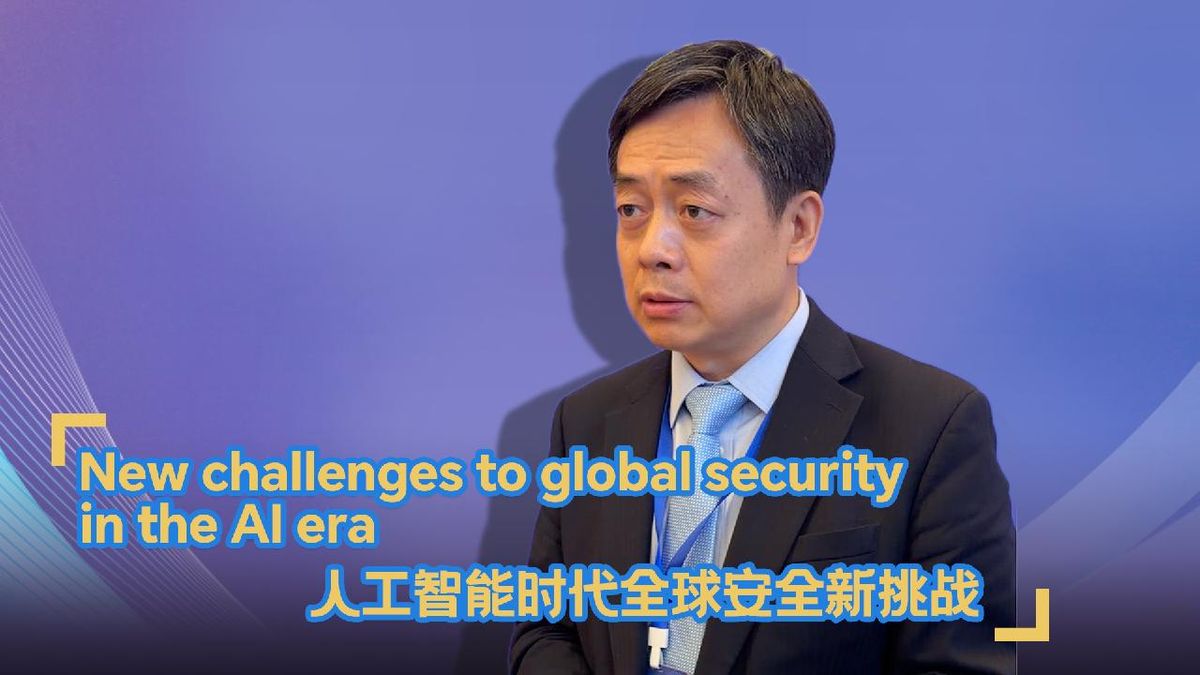
The rapid advancement of artificial intelligence (AI) presents a complex and multifaceted challenge to international security and human rights, a concern recently articulated by Professor Wang Yiwei, Director of the Institute of International Affairs at Renmin University of China. Speaking at the 2026 Forum on Global Human Rights Governance, Professor Wang emphasized that while AI offers significant societal benefits, its unchecked proliferation and potential misuse could trigger unprecedented global instability. This perspective, shared on Thursday, June 11, 2026, via an interview with CGTN, underscores a growing international consensus on the urgent need for robust governance frameworks.
Professor Wang identified several critical areas where AI poses substantial risks. Foremost among these is the potential for AI to be weaponized, transforming it into a tool for conflict that could severely undermine global peace and stability. The development of autonomous weapon systems, AI-enhanced cyber warfare capabilities, and sophisticated surveillance technologies raises profound ethical and strategic questions. Such advancements could lower the threshold for conflict, accelerate decision-making processes beyond human comprehension, and introduce new forms of warfare with unpredictable consequences, potentially sparking a new arms race among major powers.
Beyond direct military applications, AI's uneven development trajectory threatens to exacerbate existing global inequalities, widening the economic and technological gap between nations. Countries with advanced AI research and development capabilities stand to gain significant economic advantages, potentially creating a new form of digital divide. This disparity could translate into geopolitical leverage, influencing trade relations, technological dominance, and overall international power dynamics. Professor Wang also noted that the pervasive "hype" surrounding AI often distracts public attention from fundamental human rights concerns, which deserve more focused scrutiny. These concerns extend beyond individual privacy to broader societal impacts, including algorithmic bias, job displacement, and the potential for AI to be used for mass surveillance or control.
The concept of human rights, as articulated by Professor Wang, extends beyond individual liberties to encompass "collective rights," intrinsically linked to the vision of a "community with a shared future for humanity." This framework, often associated with Chinese foreign policy discourse, posits that all nations and peoples share common interests and destinies. Therefore, the development and regulation of AI must serve the well-being of all humanity, prioritizing people's interests over technological advancement for its own sake. This perspective highlights a philosophical divergence in how AI ethics and governance might be approached globally, with some nations emphasizing individual autonomy and others focusing on collective societal benefit.
To mitigate these escalating crises, Professor Wang stressed the critical necessity of adopting a collaborative global governance paradigm. This call for international cooperation reflects the transnational nature of AI's challenges, which cannot be effectively addressed by any single nation acting alone. Establishing international norms, treaties, and regulatory bodies for AI development and deployment would be crucial to prevent its weaponization and ensure its ethical use. Such a framework would need to navigate complex geopolitical realities, including competition for technological supremacy and differing national interests.
The challenge lies in forging consensus among diverse stakeholders, including governments, technology companies, civil society organizations, and academic institutions, on how to govern a technology that is evolving at an unprecedented pace. Preventing AI from becoming a tool for war and ensuring it serves human well-being requires not only technological safeguards but also robust diplomatic efforts and a shared commitment to ethical principles. As Professor Wang concluded, "human beings are the end not the means," underscoring the fundamental principle that AI should always remain a tool to achieve human goals, rather than dictating them. The trajectory of AI development in the coming years will profoundly shape the future of global security, human rights, and international relations.
Source referenced: CGTN
This brief was synthesized by our Editorial Engine and reviewed by The Ground Narrative team.